Farm, Barn & Ranch LED Lighting: The Complete Buyer's Guide for 2026
What Is Farm & Barn LED Lighting?
Farm and barn LED lighting encompasses a range of high-performance fixtures engineered specifically for the unique demands of agricultural environments — where dust, moisture, extreme temperatures, and towering ceiling heights push standard lighting to its breaking point. Unlike residential or basic commercial fixtures, agricultural-grade LEDs are built to deliver reliable, powerful illumination in conditions that would destroy ordinary lights within months.
Whether you're lighting a horse barn, a dairy milking parlor, an equipment shop, a livestock arena, a grain storage facility, or the perimeter of a working ranch, the right LED fixtures transform safety, productivity, and animal welfare while dramatically cutting energy costs.
PrimeLights offers a complete selection of commercial and industrial LED lighting solutions trusted by farmers, ranchers, equestrian facility managers, and agricultural operations across the country. Our fixtures are built to handle the real-world conditions of agricultural life — and backed by the expertise to help you choose exactly what you need.
Why LED Lighting Is Transforming Agriculture in 2026
The agricultural sector has been one of the fastest adopters of LED technology, and for good reason. Farm operations run on thin margins, and lighting costs — both energy and maintenance — add up fast across barns, outbuildings, arenas, and outdoor areas that often run lights 12-16 hours a day or more.
Farms and ranches that have switched from legacy lighting to LED report energy cost reductions of 50-75%, near-total elimination of maintenance costs, improved animal health and production due to better light quality, and significantly enhanced safety for workers and livestock.
The Problem with Traditional Barn and Farm Lighting
Traditional lighting technologies were never designed for the harsh realities of agricultural environments, and each comes with serious limitations:
Lighting Technology Comparison for Farm & Barn Applications
TechnologyLifespanEnergy UseWarm-Up TimeDust/Moisture ToleranceCold Weather PerformanceIncandescent1,000 hrsVery HighInstantPoorModerateFluorescent T8/T1210,000-15,000 hrsModerate1-3 minPoorVery PoorMetal Halide6,000-15,000 hrsHigh5-15 minModerateModerateHPS (High Pressure Sodium)10,000-24,000 hrsHigh3-10 minModerateModerateLED Farm Lighting50,000-100,000 hrsVery LowInstantExcellent (IP65+)Excellent
Fluorescent Failures on the Farm: Fluorescent tubes are one of the most common fixtures found in older barns, and one of the worst choices for agricultural use. They dim significantly and often refuse to start in temperatures below 50°F — making them unreliable in unheated barns for most of the year in northern climates. They're fragile, easily broken by livestock contact or vibration from equipment, and the mercury inside creates a hazardous cleanup situation around animals and feed. The constant flickering and buzzing can also stress livestock and poultry.
Metal Halide and HPS Drawbacks: High-intensity discharge fixtures like metal halide and high pressure sodium have been barn staples for decades, but their 5-15 minute warm-up times create dangerous darkness gaps during power interruptions. They also run extremely hot — a serious fire hazard in hay-filled environments — and their poor color rendering makes it difficult to spot injuries, illness, or contamination in livestock.
Incandescent Heat Hazards: Heat lamps and incandescent bulbs remain disturbingly common in barns despite being one of the leading causes of barn fires. They convert 95% of energy into heat rather than light, creating extreme fire risk near hay, straw, bedding, and other combustible materials found in every agricultural building.
Key Advantages of LED Lighting for Farms, Barns & Ranches
1. Dramatic Energy Savings Across Large Operations
Farms typically have far more square footage under roof than most commercial businesses — and that lighting runs for long hours. LED fixtures consume 50-75% less electricity than equivalent legacy lighting, and the savings multiply across multiple barns, shops, arenas, and outbuildings.
Annual Energy Cost Comparison (per fixture, 14 hrs/day farm operation)
Fixture TypeAnnual kWhAnnual Cost @ $0.12/kWhMetal Halide (400W)2,044 kWh$245.28HPS (250W)1,278 kWh$153.30LED Equivalent (150W)766 kWh$91.98Annual Savings vs. Metal Halide1,278 kWh$153.30
Multiply that savings across 20, 50, or 100+ fixtures on a large operation, and the payback period on an LED upgrade is often under 18 months.
2. Extreme Lifespan Eliminates Maintenance Headaches
Quality agricultural LED fixtures are rated for 50,000 to 100,000 hours. At 14 hours of daily use, a 50,000-hour fixture lasts over 9 years — eliminating the costly, time-consuming, and often dangerous task of replacing bulbs in high barn ceilings, riding arenas, and hard-to-reach outbuildings. No more renting lifts, climbing ladders in stalls, or shutting down operations for relamping.
3. Instant-On Performance — No Warm-Up, No Waiting
LED fixtures reach full brightness the instant they're switched on. This is critical in agricultural settings where sudden darkness during a metal halide restrike could panic livestock, create worker safety hazards, or disrupt time-sensitive operations. Instant-on also enables effective use of motion sensors and timers for areas like equipment shops, tack rooms, and storage buildings.
4. Full Performance in Extreme Cold
Unlike fluorescent fixtures that dim or fail below 50°F, LEDs actually perform better in cold temperatures. This makes them ideal for unheated barns, cold storage, calving sheds, and any agricultural building in climates where temperatures routinely drop below freezing. Your lights work as hard as you do, regardless of the weather.
5. Superior Durability for Tough Environments
Agricultural environments are brutal on lighting. Dust from hay and grain, moisture from washdowns and humidity, ammonia from livestock, and vibration from heavy equipment all take their toll. LED fixtures — especially those rated IP65 or higher — are sealed against dust and moisture intrusion and contain no fragile filaments or glass tubes to shatter. They resist vibration, corrosion, and impact in ways that traditional fixtures simply cannot.
6. Better Light Quality Improves Animal Welfare and Worker Safety
Modern LED fixtures deliver high Color Rendering Index (CRI) values of 80-95+, meaning you can accurately see colors, identify injuries or illness in livestock, spot contamination, and perform detailed work safely. Proper lighting at the right color temperature has also been shown to positively influence dairy production, poultry laying cycles, and overall animal behavior and welfare.
7. Reduced Fire Risk
LED fixtures run dramatically cooler than incandescent, halogen, and HID alternatives. In environments surrounded by hay, straw, bedding, and other combustible materials, this isn't just an advantage — it's a safety imperative. Switching to LED is one of the single most effective steps any farm can take to reduce barn fire risk.
Types of LED Fixtures for Farm, Barn & Ranch Applications
LED High Bay Lights (UFO and Linear)
Best For: Horse barns, livestock barns, riding arenas, equipment storage buildings, hay barns, large shops
High bay LED fixtures are the backbone of barn lighting, engineered for the 20-50+ foot ceiling heights common in agricultural buildings. They deliver powerful, focused illumination that reaches work and living areas far below.
UFO High Bays: Compact, round fixtures ideal for open barn floors, riding arenas, and equipment bays where wide coverage from fewer fixtures is needed. Typical output ranges from 15,000 to 50,000+ lumens.
Linear High Bays: Rectangular fixtures that distribute light along their length. Better for aisle-oriented barns, stall rows, and long equipment buildings where uniform end-to-end illumination is needed.
LED Shop Lights / Strip Lighting
Best For: Tack rooms, feed rooms, workshops, milking parlors, smaller barns, equipment maintenance areas
4-foot and 8-foot LED shop lights provide bright, even illumination for standard ceiling heights of 8-15 feet. These are the workhorses for the smaller, task-focused spaces found on every farm. Linkable designs allow multiple fixtures to be daisy-chained from a single power source, simplifying installation in buildings with limited wiring.
Vapor Tight / Vapor Proof LED Fixtures
Best For: Dairy operations, milking parlors, washdown areas, livestock confinement, poultry houses, any high-moisture or high-ammonia environment
Vapor tight fixtures are sealed against moisture, dust, and corrosive gases — making them essential for the wettest, dirtiest environments on the farm. Rated IP65 or higher, these fixtures withstand direct spray-down cleaning, high humidity, and ammonia exposure without degradation. If you're lighting an area where animals live, where washdowns happen, or where humidity is constant, vapor tight is the right call.
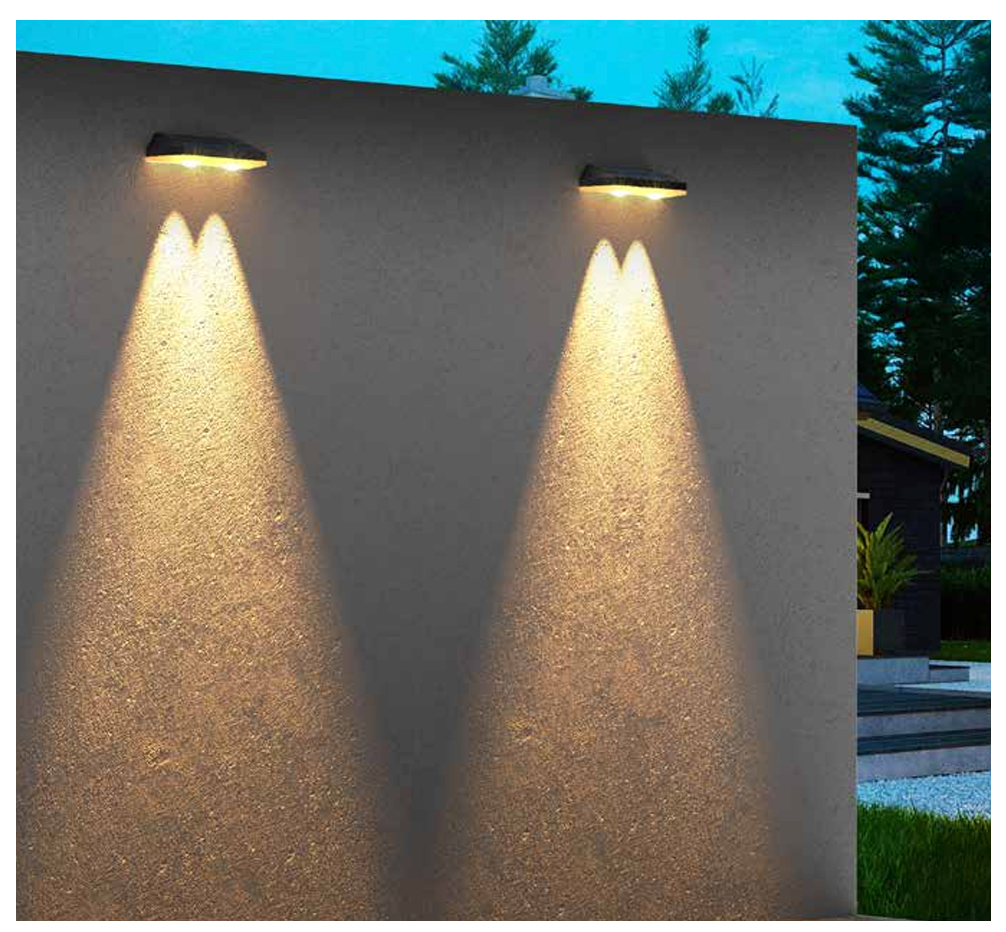
LED Flood Lights and Wall Packs
Best For: Barnyard illumination, loading areas, equipment yards, barn exteriors, building entrances, perimeter security
Outdoor wall-mounted fixtures provide powerful illumination for the working areas immediately surrounding farm buildings. They're essential for safe nighttime loading, equipment operation, and general security around barns and outbuildings.
LED Area Lights / Pole-Mounted Lights
Best For: Driveways, parking areas, pasture gates, feedlots, outdoor arenas, large equipment yards
Pole-mounted area lights like the PrimeLights Hammerhead deliver wide-area illumination for the expansive outdoor spaces common on farms and ranches. They're ideal for driveways, main gates, feedlot areas, and anywhere that needs reliable lighting far from building walls.
LED Solar Lighting
Best For: Remote outbuildings, fence lines, gate areas, pasture access points, equipment sheds without electrical service
Solar-powered LED fixtures are a game-changer for farms and ranches where running electrical service to remote locations is cost-prohibitive or impractical. They provide reliable illumination for gates, outbuildings, and access points without trenching, wiring, or ongoing electrical costs.
LED Canopy Lights
Best For: Covered equipment shelters, lean-tos, fuel station overhangs, hay storage covers, loading dock canopies
Canopy-mounted fixtures provide downward illumination for covered outdoor areas. They're ideal for the various covered structures found on working farms where equipment, fuel, and materials need to be accessed safely after dark.
LED Security Lights
Best For: Building entrances, equipment storage, fuel tanks, perimeter monitoring, predator deterrence
Motion-activated security lights serve double duty on farms — deterring both human trespassers and animal predators. LED security fixtures provide instant-on bright illumination when triggered, with minimal energy use during inactive periods.
Emergency Battery Backup Lighting
Best For: Livestock barns, milking parlors, poultry houses, any facility where power loss endangers animals
Power outages are a serious concern for agricultural operations where livestock depend on ventilation, water systems, and safe lighting. Emergency battery backup fixtures provide automatic illumination during power failures, maintaining safe conditions until power is restored.
Explosion Proof / Hazardous Location Lighting
Best For: Grain elevators, grain storage bins, fuel storage areas, chemical storage, any location with combustible dust or fumes
Grain dust is explosible. Fuel vapors are flammable. These are realities on every farm. Explosion-proof LED fixtures are sealed and designed to prevent ignition of combustible dust and vapors, meeting NEC Class I and Class II hazardous location requirements for these critical areas.
How to Choose the Right LED Fixture for Your Farm: Technical Specifications Explained
Understanding Lumens: How Much Light Does Your Barn Need?
Lumens measure the total visible light output of a fixture. For agricultural applications, lighting requirements vary significantly based on the type of space and its function:
ApplicationRecommended Lumens per Sq FtHay storage / general storage barns15-25 lumens/sq ftLivestock housing (cattle, sheep)25-40 lumens/sq ftHorse barns / stall areas30-50 lumens/sq ftRiding arenas40-60 lumens/sq ftMilking parlors / dairy operations50-75 lumens/sq ftEquipment workshops / repair shops70-100 lumens/sq ftVeterinary treatment areas75-100 lumens/sq ft
Color Temperature (Kelvin): Matching Light to the Task
Color temperature affects both human work performance and animal behavior. Different areas of your farm may benefit from different color temperatures:
3000K-3500K (Warm White): Softer, yellowish light. Some equestrian facilities prefer warm tones in stall areas for a calming effect on horses.
4000K-4500K (Neutral White): Balanced white light. A good all-purpose choice for livestock barns where both animal comfort and worker visibility matter.
5000K (Daylight): Crisp, bright white light resembling natural daylight. Best for workshops, equipment shops, milking parlors, and any area where maximum visibility and alertness are needed. Most popular choice for the majority of farm applications.
5000K-6500K and Photoperiod Lighting: In dairy and poultry operations, specific light intensity and duration (photoperiod) directly influence milk production and egg-laying cycles. Dairy operations commonly use 16 hours of 150-200 lux light followed by 8 hours of darkness to stimulate production. Consult your veterinary or extension service advisor for species-specific recommendations.
Expert Recommendation: For most barn and farm applications, 5000K provides the best balance of visibility, safety, and versatility. PrimeLights fixtures with selectable color temperature (CCT) give you the flexibility to fine-tune after installation.
CRI (Color Rendering Index): Why It Matters on the Farm
CRI measures how accurately colors appear under a light source compared to natural sunlight. On the farm, this directly impacts your ability to:
- Spot injuries, infections, or illness in livestock by seeing true skin and tissue colors
- Identify contamination in feed, bedding, or milk
- Perform accurate equipment repairs where color-coded wiring matters
- Assess crop and produce quality
CRI 80-89: Good quality. Standard for most barn and agricultural applications.
CRI 90+: Excellent. Recommended for milking parlors, veterinary treatment areas, and produce handling where color accuracy is critical.
IP Rating: Dust and Moisture Protection
The Ingress Protection (IP) rating tells you how well a fixture is sealed against the environmental hazards common on farms:
IP RatingDust ProtectionMoisture ProtectionFarm ApplicationsIP20BasicNoneClimate-controlled offices onlyIP44ProtectedSplash-proofIndoor workshops, tack roomsIP65Dust-tightWater jet resistantLivestock barns, dairy, poultry, washdown areasIP66Dust-tightPowerful water jet resistantMilking parlors, food processingIP67Dust-tightTemporary immersionExtreme washdown, flood-prone areas
Recommendation: For any area housing livestock or subject to washdown cleaning, specify IP65 or higher. For workshops and dry storage, IP44 is typically sufficient.
Ceiling Height and Fixture Selection for Agricultural Buildings
Agricultural buildings vary enormously in height. Matching fixture type to ceiling height ensures proper illumination:
Ceiling HeightTypical Farm BuildingsRecommended FixtureLumen Output8-12 ftTack rooms, feed rooms, small shops4-ft LED shop lights, wraparounds4,000-7,000 lumens12-15 ftSmall barns, equipment bays, milking parlorsLinear shop lights, low-bay fixtures7,000-15,000 lumens15-25 ftHorse barns, livestock barns, large shopsLow-bay or high-bay fixtures15,000-25,000 lumens25-40 ftEquipment storage barns, hay barns, arenasUFO or linear high bays25,000-40,000 lumens40+ ftLarge riding arenas, aircraft hangars, hay storageHigh-power high bays40,000-50,000+ lumens
LED Lighting Applications: Farm Area-by-Area Guide
Horse Barns and Equestrian Facilities
Horse barns present unique lighting challenges: tall center aisles, lower stall areas, wash racks with heavy moisture, and outdoor arenas that need powerful illumination. Plan high bay fixtures for the main aisle at 40-50 lumens per square foot, vapor tight fixtures for wash stalls, and separate outdoor area lighting for arenas and turnout areas. Many equestrian facilities prefer 4000K-5000K for a bright but comfortable environment.
Dairy Operations and Milking Parlors
Dairy lighting directly impacts production. Research consistently shows that dairy cows exposed to 16-18 hours of bright light (150-200 lux at cow level) produce 5-16% more milk. Milking parlors need high CRI (80+), high lumen output for worker visibility and food safety compliance, and vapor tight fixtures rated for ammonia exposure and regular washdown. This is one area where getting the lighting right has a direct, measurable impact on revenue.
Poultry Houses
Poultry lighting requires careful attention to intensity, duration, color temperature, and uniformity. Chickens are highly sensitive to light spectrum and photoperiod, which directly influence laying rates, growth, and behavior. Dimmable LED fixtures with warm-to-neutral color temperatures (2700K-4000K) are typically preferred. Vapor tight construction is essential for the dusty, humid, ammonia-rich environment of poultry houses.
Livestock Barns (Cattle, Sheep, Swine)
General livestock housing needs durable, sealed fixtures that resist dust and ammonia. High bay or linear fixtures in the 25-40 lumens per square foot range provide good general visibility while supporting animal welfare. Vapor tight construction is strongly recommended for any confined livestock housing.
Equipment Shops and Farm Workshops
The farm shop is where precision matters. Specify high-output LED shop lights or high bays at 70-100 lumens per square foot with 5000K color temperature and CRI 80+ for detailed mechanical work, welding prep, and equipment repair. These spaces benefit from the same lighting standards as professional auto shops and industrial workshops.
Hay and Grain Storage
Storage buildings need sufficient light for safe operation of equipment and personnel, but at lower intensities (15-25 lumens/sq ft). The critical consideration here is safety: sealed fixtures that cannot ignite combustible dust, and explosion-proof fixtures in grain elevators or bins where dust concentrations may reach explosive levels.
Outdoor and Perimeter Lighting
Working ranches need reliable outdoor lighting across large areas — driveways, feedlots, loading chutes, equipment yards, and building perimeters. Pole-mounted area lights, wall packs, and motion-activated security fixtures cover these needs. Solar options are ideal for gates, fence lines, and remote access points where electrical service isn't available.
Installation Planning for Farm and Barn LED Lighting
Calculating Your Lighting Needs
Before purchasing fixtures, calculate the requirements for each building and area:
- Measure the total square footage of each space to be lit.
- Determine the required lumens per square foot based on the application (see tables above).
- Divide total lumens needed by the output of your chosen fixture.
- Plan fixture spacing to ensure even coverage without dark spots.
Example: A 60' x 120' riding arena (7,200 sq ft) requiring 50 lumens/sq ft needs 360,000 total lumens. Using 36,000-lumen high bay fixtures, you would need 10 fixtures distributed evenly across the ceiling.
Mounting Considerations for Agricultural Buildings
Surface/Flush Mount: Best for lower ceilings in tack rooms, feed rooms, and smaller shops. Maximizes headroom.
Suspended/Pendant Mount: Ideal for tall barns where fixtures need to hang below rafters or trusses to bring light closer to the working level.
Chain/Cable Hanging: Common for high bay fixtures in barns and arenas. Allows height adjustment and works with exposed truss structures typical of agricultural buildings.
Electrical Considerations
Most standard agricultural LED fixtures operate on 120V or 277V single-phase power common on farms. Larger operations or high-power fixtures may require 480V three-phase power. Key considerations:
- Verify available voltage at each building before specifying fixtures.
- 277V and 480V fixtures are more efficient for large installations, reducing wire size requirements and voltage drop over long runs.
- Motion sensors and dusk-to-dawn photocells can reduce energy costs by 40-60% on outdoor and intermittently-used buildings.
- Emergency battery backup should be specified for any building housing livestock.
Safety Note: All permanent electrical installations should be performed by qualified electricians in accordance with the National Electrical Code and local agricultural building codes.
Wiring for Remote Buildings
Farms often have buildings spread across large properties. When planning lighting for remote buildings, consider voltage drop over long wire runs — 277V or 480V fixtures significantly reduce this issue compared to 120V. For buildings without electrical service, solar-powered LED fixtures eliminate the cost of trenching and running wire entirely.
The Future of Farm LED Lighting: 2026 and Beyond
Agricultural LED lighting continues to advance, with several developments particularly relevant to farm operations:
Smart Lighting Controls: Bluetooth and WiFi-connected fixtures enabling remote monitoring and scheduling across multiple buildings from a smartphone. Particularly valuable for large operations managing lighting across dozens of structures.
Precision Photoperiod Systems: Automated lighting systems that manage light duration, intensity, and spectrum for dairy and poultry production, optimizing output while reducing energy waste.
Solar + Battery Integration: Increasingly powerful and affordable solar fixtures with battery storage, extending reliable LED lighting to even the most remote corners of a property.
Enhanced Efficiency: LED chip technology continues to improve, pushing above 200 lumens per watt and further reducing the energy footprint of farm lighting.
Integrated Sensors: Motion detection, daylight harvesting, and temperature monitoring built directly into fixtures, enabling automated, responsive lighting across the operation.
Frequently Asked Questions About Farm and Barn LED Lighting
What are the best LED lights for a horse barn?
For horse barns with 15-25 foot ceilings, LED high bay fixtures producing 20,000-30,000+ lumens are ideal for the main aisle. Choose fixtures rated IP65 for dust resistance, with 4000K-5000K color temperature for bright, comfortable illumination. Supplement with vapor tight fixtures in wash stalls and lower-output shop lights in tack and feed rooms.
How many lumens do I need for a barn?
It depends on the barn's purpose. General livestock housing needs 25-40 lumens per square foot, horse barns and stall areas 30-50 lumens/sq ft, and riding arenas 40-60 lumens/sq ft. A 40' x 80' horse barn (3,200 sq ft) at 40 lumens/sq ft needs 128,000 total lumens — roughly 5-7 high bay fixtures depending on output.
Can LED barn lights handle cold weather?
Yes. Unlike fluorescent fixtures that fail below 50°F, LED fixtures maintain full output even in sub-zero temperatures. LEDs actually operate more efficiently in cold conditions, making them the ideal choice for unheated barns, calving sheds, and cold-climate agricultural buildings.
Are LED lights safe for barns with hay storage?
LED fixtures run dramatically cooler than incandescent, halogen, and HID alternatives, significantly reducing fire risk. However, in grain storage facilities where combustible dust concentrations may reach explosive levels, explosion-proof rated fixtures are required. For general hay barns, standard enclosed LED fixtures are a far safer alternative to any legacy lighting technology.
Do LED lights affect dairy cow milk production?
Yes, positively. Research shows that providing dairy cows with 16-18 hours of bright light (150-200 lux) followed by 6-8 hours of darkness can increase milk production by 5-16%. LED fixtures are ideal for photoperiod management because they provide consistent, controllable light output, instant on/off for precise scheduling, and dramatically lower energy costs compared to running traditional fixtures for 16+ hours daily.
What IP rating do I need for a milking parlor?
IP65 is the minimum recommended rating for milking parlors and any area subject to washdown cleaning. IP66 provides additional protection against high-pressure water jets and is preferred for food-contact areas where aggressive cleaning protocols are standard.
Can I use solar LED lights on my farm?
Absolutely. Solar LED fixtures are ideal for farm and ranch applications where running electrical service is impractical or cost-prohibitive — gates, fence lines, remote outbuildings, pasture access points, and equipment sheds. Modern solar fixtures with battery storage provide reliable illumination through the night after a full day's charge.
How do I light a large riding arena with LEDs?
Riding arenas need 40-60 lumens per square foot with uniform coverage and minimal shadows. For a standard 60' x 120' indoor arena, plan for 8-12 high bay LED fixtures (30,000-40,000+ lumens each) mounted at peak height. Position fixtures in rows to provide even, overlapping coverage across the full arena floor. Outdoor arenas use pole-mounted area lights positioned around the perimeter.
What about ammonia exposure in livestock buildings?
Ammonia is corrosive and will degrade unprotected fixtures over time. For any building housing livestock — especially confined operations — specify vapor tight fixtures with IP65+ ratings and housings specifically designed to resist ammonia corrosion. These sealed fixtures prevent gas and moisture from reaching and damaging internal components.
How do I calculate the payback period for upgrading to LED?
Calculate your current annual lighting energy cost (watts × hours × days × electricity rate), then calculate the same figure using LED wattage. The difference is your annual savings. Divide the total cost of new LED fixtures plus installation by the annual savings to get your payback period. Most agricultural LED upgrades pay for themselves in 12-24 months, with 8-10+ years of additional savings beyond that.
Why Choose PrimeLights for Your Farm and Barn LED Lighting
PrimeLights has been a trusted name in commercial and industrial LED lighting since 2010, with over 150,000 satisfied customers across every type of demanding work environment — including thousands of agricultural operations.
Built for Real Farm Conditions: Our fixtures are selected and tested for the dust, moisture, temperature extremes, and corrosive atmospheres that define agricultural environments. We don't sell residential-grade fixtures repackaged with a farm label.
Complete Agricultural Product Range: From high bay arena lights to vapor tight dairy fixtures to solar-powered gate lights, we offer every fixture type a farm or ranch operation needs — all from one trusted source.
Expert Agricultural Lighting Consultation: Our lighting specialists understand the unique requirements of agricultural applications and provide free consultation to help you select the right fixtures, calculate lighting needs, and optimize your installation.
Industry-Leading Warranties: We stand behind our products with comprehensive warranties that reflect our confidence in fixture durability and longevity.
Competitive Volume Pricing: Agricultural lighting projects often involve dozens or hundreds of fixtures across multiple buildings. Our volume pricing and contractor programs make professional-grade LED lighting accessible for operations of any size.
Get Started with PrimeLights Farm & Barn LED Lighting
Ready to upgrade your farm, barn, or ranch with energy-efficient LED lighting that's built to handle agricultural conditions? Contact the PrimeLights team today for personalized recommendations based on your specific buildings, operations, and budget.
Our lighting experts can help you:
- Calculate optimal fixture count and placement for each building on your property
- Select the right fixture type, IP rating, lumen output, and color temperature for each application
- Estimate energy and maintenance cost savings versus your current lighting
- Provide custom quotes for multi-building farm and ranch projects
- Identify available utility rebates and agricultural energy incentive programs

Collection:
LED Farm Lights & Barn Lights
About PrimeLights LED Farm Lights
No matter the conditions your farm or barn is under, our farm lights are manufactured to endure the elements. That’s why some of them are shatterproof, waterproof, or vapor-tight. With energy-efficient LEDs, they’ll save you money on your energy bill and last as long as you need (50,000 hours or longer, to be exact). And they give off less heat than incandescent bulbs—making them ideal for use around livestock.
About PrimeLights LED Barn Lights
Have a barn? PrimeLights is proud to offer one of the best collections of LED barn lighting fixtures that you can find online. No matter the size or style of your barn—be it a round barn, a dutch barn, a salt barn or a gable, we have a light fixture that’s perfect for you. Use your barn to store something other than hay? Our energy-efficient LED barn lights can be used around livestock, feed and farm equipment, even tractors and motorcars! They’ll shine bright while consuming very little energy—so you rest easy keeping your lights on, for as long as you need them to, and at any time of day.
Find The Best LED Barn Lighting For Your Farm or Ranch
PrimeLights works with farm and ranch owners to help find the best LED barn lighting layout for their property. Proper barn lighting is important, from being able to see clearly while tending to livestock, to keeping the area bright for security purposes. By choosing PrimeLights for LED barn lights, our LED Shop Light Fixture Calculator explains which light fixtures, and how many light fixtures are needed based on the square footage of the barn and the height of its ceilings. Additionally, contact the team at PrimeLights online or over the phone for a FREE computerized lighting layout and fixture recommendation, entirely custom to each barn we work with. For commercial barn lights that meet the needs of your operation, PrimeLights has got you covered.
Get Your LED Farm Lights & Barn Lights with PrimeLights
To learn more about our ranch LED lights and the ways they can benefit your farm operation, contact us today. We can answer all your questions about our commercial LED lighting fixtures and can provide a custom lighting solution based on your unique needs.