Metal Building & Pole Barn LED Lighting: The Complete Buyer's Guide for 2026
What Is Metal Building & Pole Barn LED Lighting?
Metal buildings and pole barns are among the most versatile structures in America — serving as workshops, garages, storage buildings, agricultural shelters, hobby shops, small business facilities, and everything in between. They're also among the most challenging environments to light properly. High open ceilings, zero insulation, extreme temperature swings, condensation that drips from every surface, dust from every direction, and electrical infrastructure that was often an afterthought — all of it conspires against traditional lighting technologies in ways that buildings with drywall ceilings and central HVAC never have to deal with.
This is where LED fixtures earn their reputation. They deliver powerful illumination at the ceiling heights metal buildings demand, perform flawlessly in unheated and unconditioned spaces, start instantly in sub-zero cold, and stand up to the dust, moisture, and temperature extremes that define these structures — for a decade or more without a single bulb change.
Whether you're lighting a backyard pole barn shop, a 60x100 equipment storage building, a commercial metal building operation, or a steel-framed hobby garage, the right LED fixtures transform a dark, frustrating space into a bright, functional one.
PrimeLights offers a complete range of commercial-grade LED fixtures trusted by metal building and pole barn owners across the country — from weekend hobbyists to full-time commercial operations. Our fixtures are built for the real conditions inside these structures, not the climate-controlled environments that residential lighting was designed for.
Why LED Lighting Is the Only Smart Choice for Metal Buildings and Pole Barns in 2026
Metal buildings amplify every weakness of legacy lighting technology. The conditions inside these structures — the temperature extremes, the condensation cycles, the dust, the vibration from overhead doors — actively destroy traditional fixtures in ways that the same fixtures might survive for years in a finished, climate-controlled building.
Metal building and pole barn owners who have switched to LED consistently report a night-and-day difference in usable brightness and coverage, the end of cold-weather lighting failures, elimination of condensation-related fixture damage and replacement, 50-75% reduction in lighting energy costs, and zero maintenance over periods of 10+ years.
For structures that are often used part-time — evenings, weekends, or seasonally — the instant-on capability of LED is particularly valuable. Walk in, flip the switch, full brightness. No waiting. No half-lit tubes struggling in a cold building. Just light, immediately, every time.
Why Traditional Lighting Fails in Metal Buildings and Pole Barns
Traditional lighting technologies weren't designed for unconditioned metal structures, and they show it. The failure modes are predictable, expensive, and frustrating.
Metal Building Lighting Technology Comparison
TechnologyLifespanCold PerformanceCondensation ToleranceInstant OnEnergy UseVibration ResistanceFluorescent T8/T1210,000-15,000 hrsVery PoorPoorNo (1-3 min)ModeratePoorCFL Bulbs8,000-10,000 hrsPoorPoorNo (1-3 min)ModeratePoorMetal Halide6,000-15,000 hrsModerateModerateNo (5-15 min)HighModerateHigh Pressure Sodium10,000-24,000 hrsModerateModerateNo (3-10 min)HighModerateIncandescent / Halogen1,000-3,000 hrsGoodModerateYesVery HighPoorLED50,000-100,000 hrsExcellentExcellent (IP65+)YesVery LowExcellent
Fluorescent: The Cold-Weather Casualty. Fluorescent tubes are the most common existing fixture in pole barns and metal buildings — and the most problematic. Below 50°F, they dim dramatically. Below 32°F, many refuse to start at all. In an unheated metal building in Wisconsin, Michigan, Minnesota, or anywhere winter temperatures drop below freezing, your fluorescents are either useless or severely underperforming for four to six months of the year. When they do work, the ballasts buzz, the tubes flicker, and the color rendering makes everything look washed out and flat. Add the condensation that forms on cold surfaces every time the temperature swings, and you've got corroded sockets, shorted ballasts, and dead fixtures on a recurring basis.
Metal Halide: Bright But Impractical. Some larger metal buildings use metal halide high bays for their raw output. But the 5-15 minute warm-up time makes them impractical for buildings used intermittently — you can't pop into the shop for 30 minutes and wait a quarter of that time for the lights to come on. Any power interruption leaves you in total darkness during the restrike period. They also run extremely hot, lose 30-40% of their output over their lifespan, and require expensive relamping at heights that typically require a lift in metal buildings.
HPS: Yellow and Useless for Detail Work. High pressure sodium fixtures produce a yellow-orange light that makes it impossible to see accurate colors. If you're doing any kind of finishing work, painting, staining, wiring, or anything where color matters, HPS turns your building into a monochromatic fog. They persist in some commercial metal buildings because they were cheap to install decades ago, but they're a poor choice for any active workspace.
Incandescent and Halogen: Short-Lived and Dangerous. Bare incandescent bulbs and portable halogen work lights are common stopgaps in metal buildings that were never properly lit. They burn out constantly, consume enormous energy, and — in the case of halogens — run hot enough to ignite sawdust, hay, solvents, and other combustible materials commonly stored in these buildings. They're a temporary solution that too many buildings have been living with permanently.
CFL Bulbs: The Worst of All Worlds. CFLs offer the dim output of incandescents, the cold-weather failure of fluorescents, the slow warm-up of both, and mercury that requires hazardous disposal. They were never a good solution for metal buildings.
Key Advantages of LED Lighting for Metal Buildings and Pole Barns
1. Instant-On at Any Temperature — The #1 Advantage
This is the single most important benefit for metal building owners, and it's not close. LED fixtures deliver 100% brightness the instant you flip the switch — whether it's 105°F in July or -20°F in January. No warm-up. No waiting. No half-lit tubes struggling to fire in a cold building.
For structures used intermittently — which describes the majority of pole barns and many metal buildings — this changes how you use the space. You walk in, the lights are on, you work, you leave. No planning around warm-up times. No leaving lights on all day because you can't cycle metal halides on and off. Just light, on demand, instantly, every single time.
2. Built to Survive Unconditioned Environments
Metal buildings sweat. The steel roof and walls act as a massive heat sink that creates condensation every time the temperature shifts — morning to afternoon, season to season, or whenever you open a bay door and let humid air meet cold steel. That condensation drips onto fixtures, pools in sockets, corrodes ballasts, and shorts out electrical connections. It's the #1 killer of traditional lighting in metal buildings.
LED fixtures rated IP65 or higher are fully sealed against moisture and dust. Water drips off. Condensation beads up and runs away. Dust can't penetrate the housing to coat lamps or degrade output. The fixture handles the real-world conditions inside a metal building without corrosion, shorting, or degradation — for years.
3. Massive Energy Savings — Especially for Part-Time Use
Many metal buildings and pole barns are used part-time — evenings after work, weekends, seasonally, or on-demand for specific projects. LED's combination of instant-on capability and ultra-low energy consumption means you only pay for light when you're actually using it, and when you are using it, you're paying 50-75% less per hour than fluorescent or metal halide.
Annual Energy Cost Comparison (per fixture, 6 hrs/day average use)
Fixture TypeWattageAnnual kWhAnnual Cost @ $0.15/kWhT8 Fluorescent (4-lamp)128W280 kWh$42.05Metal Halide High Bay400W876 kWh$131.40Incandescent (2x 100W)200W438 kWh$65.70LED Shop Light (T8 equivalent)40-50W110 kWh$16.43LED High Bay (MH equivalent)150W329 kWh$49.28Annual Savings vs. Fluorescent (per fixture)170 kWh$25.62Annual Savings vs. Metal Halide (per fixture)547 kWh$82.12
For a pole barn with 10 fixtures, that's $250-$820 in annual savings depending on what you're replacing. The fixtures typically pay for themselves in the first year.
4. Decade-Plus Lifespan — Install Once, Done
LED shop lights rated for 50,000 hours at 6 hours of daily use last over 22 years. Even at 10 hours a day, you're looking at 13+ years. At part-time pole barn usage (3-4 hours/day), the math gets absurd — 34+ years of rated life.
The practical impact: you install the fixtures once and never climb a ladder in your pole barn to change a bulb again. No more stocking replacement tubes. No more troubleshooting dead ballasts. No more dark spots over your workbench because a tube died and you haven't gotten around to replacing it. The lights just work, year after year, without intervention.
5. Superior Light Quality for Real Work
High CRI (80-90+) and 5000K daylight color temperature mean you can actually see what you're working on. Colors look accurate — wood stains look like wood stains, wire colors are distinguishable, paint matches look right, and details are sharp and clear.
The difference between working under aging fluorescents with CRI in the 60s and working under LED fixtures with CRI 80+ is immediately noticeable. Everything looks clearer, sharper, and more natural. Eye strain drops. Fatigue over long sessions is noticeably reduced. It's the difference between fighting your lighting and forgetting it's even there because it just works.
6. Handles the Vibration
Metal buildings vibrate. Overhead doors opening and closing, wind buffeting the panels, equipment running, vehicles driving in and out — all of it transmits through the steel structure directly to the fixtures. Fluorescent tubes rattle loose from their sockets. Filaments break. Glass tubes shatter. LED fixtures are solid-state with no fragile components — no filaments, no glass tubes, no loose connections. They handle the constant vibration of a working metal building without degradation.
7. Low Profile Preserves Headroom
Many metal buildings and pole barns already have clearance concerns — especially when equipment, vehicles, or tall loads need to pass through the building. LED shop lights are typically slim and lightweight, mounting flush or near-flush to the ceiling or purlins. UFO high bays are compact and hang close to the mounting point. In spaces where every inch of clearance matters, the low-profile design of LED fixtures is a practical advantage over bulky fluorescent fixtures and large metal halide reflectors.
Types of LED Fixtures for Metal Buildings and Pole Barns
4-Foot LED Shop Lights
Best For: Pole barns and metal buildings with ceilings under 16 feet, workshops, hobby spaces, smaller storage buildings, workbench areas
The most versatile and cost-effective option for standard pole barns. 4-foot LED shop lights deliver 4,000-7,000+ lumens per fixture in a format that mounts easily to purlins, trusses, or the roof deck.
The key feature for metal building installations: linkable, plug-in designs. Most pole barns have limited electrical infrastructure — sometimes a single circuit or a couple of outlets. Linkable shop lights let you daisy-chain 4-6 fixtures from a single power source, creating a full lighting installation without adding circuits or running new wire. Hang them, link them, plug them in. Done.
8-Foot LED Shop Lights
Best For: Larger pole barns and metal buildings, long workbench runs, wider bays, buildings over 30 feet long
8-foot fixtures cover more area with fewer fixtures and fewer dark gaps between lights. In a 40, 50, or 60-foot-long metal building, 8-foot fixtures provide more uniform coverage along the length of the building with fewer units, fewer connection points, and a cleaner installation. They're particularly effective in buildings with work zones that run the full length of the structure.
UFO High Bay LED Lights
Best For: Metal buildings and pole barns with ceilings 20-45+ feet, large equipment storage, clear-span structures, riding arenas
The go-to fixture for tall metal buildings. UFO high bays deliver concentrated downward illumination from mounting heights that would swallow the output of standard shop lights. A single UFO high bay producing 25,000-40,000 lumens can replace a 400W metal halide fixture while using less than half the energy.
Hook-mount installation is standard — screw a hook into a purlin or truss chord, hang the fixture, connect power. The compact, lightweight design makes installation straightforward even at challenging heights.
Linear High Bay LED Lights
Best For: Long, narrow metal buildings, aisle-oriented layouts, storage buildings with racked shelving, buildings where work flows along the length
Linear high bays distribute light along their length rather than in a circular pattern. For metal buildings that are significantly longer than they are wide — common in agricultural and commercial applications — linear fixtures provide more uniform end-to-end coverage than round UFO fixtures.
LED Vapor Tight Fixtures
Best For: Any unconditioned metal building where condensation is a concern (most of them), washdown areas, high-humidity environments, livestock buildings, buildings in humid climates
For most metal buildings and pole barns, vapor tight fixtures are not a luxury — they're the right specification. Uninsulated metal buildings experience condensation as a matter of physics. Every temperature swing creates moisture on interior steel surfaces, and that moisture finds its way to fixtures. IP65-rated vapor tight LEDs are fully sealed against this moisture, as well as the dust, dirt, and debris common in working metal buildings.
If you're only going to remember one specification for metal building lighting, make it this: IP65 or higher.
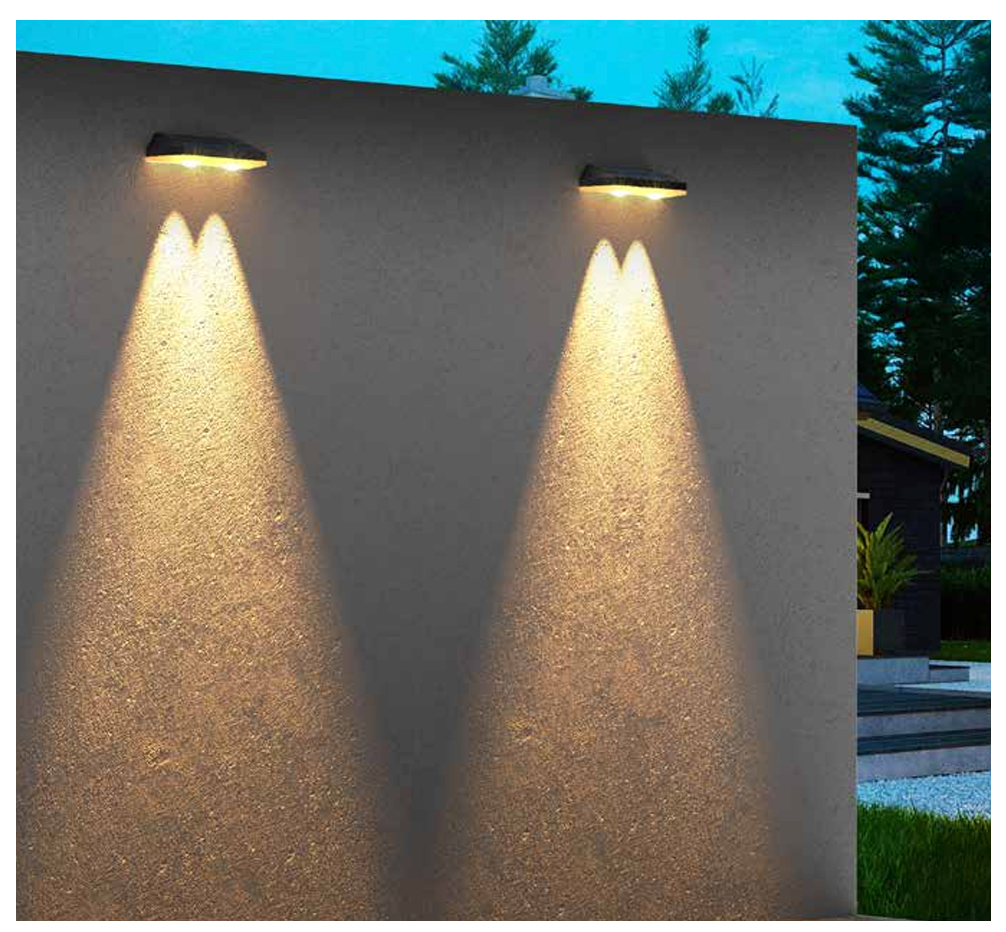
LED Wall Packs and Flood Lights
Best For: Building exteriors, entrance illumination, loading areas, surrounding yard and driveway, security
The area immediately around a metal building needs light too — for safe access, vehicle maneuvering, loading, and security. LED wall packs mounted on the building exterior and flood lights aimed at driveways and work areas provide complete perimeter coverage. Dusk-to-dawn photocells automate operation; motion sensors boost output when activity is detected.
LED Solar Lights
Best For: Pole barns and metal buildings without electrical service, remote outbuildings, gates, access roads, perimeter lighting
Many pole barns — especially on farms, ranches, and rural properties — have no electrical service. Running power to a remote building can cost $5,000-$15,000+ depending on distance and terrain. Solar-powered LED fixtures eliminate this cost entirely, providing reliable illumination powered by a roof-mounted or pole-mounted solar panel with battery storage. Modern solar LED fixtures provide dependable output through the night after a full day's charge.
LED Canopy Lights
Best For: Lean-to extensions, covered equipment areas, fuel station overhangs, attached open-sided structures
Many metal buildings include lean-to additions, open-sided equipment covers, or canopy extensions. Canopy-mounted LED fixtures provide downward illumination for these covered outdoor areas, keeping equipment, vehicles, and materials accessible after dark.
LED Security and Motion-Activated Lights
Best For: Entrances, equipment and tool storage areas, building perimeter, isolated buildings
Metal buildings on rural properties or commercial lots benefit from motion-activated security lighting. LED security fixtures provide instant full brightness when triggered, deterring trespassers and illuminating the area for legitimate access — with minimal energy use during inactive periods.
How to Choose the Right LED Fixture for Your Metal Building or Pole Barn
Understanding Lumens: How Much Light Does Your Building Need?
The right amount of light depends entirely on what you're doing in the building. A storage building that you walk into twice a week needs far less light than a woodworking shop you use every evening.
Building UseRecommended Lumens per Sq FtBasic storage (seasonal items, overflow)15-25 lumens/sq ftVehicle and equipment storage25-40 lumens/sq ftGeneral workshop / hobby space50-75 lumens/sq ftSerious woodworking / fabrication / welding75-100 lumens/sq ftAutomotive repair / restoration70-100 lumens/sq ftCommercial operations / retail from metal building50-75 lumens/sq ftAgricultural livestock shelter25-40 lumens/sq ftRiding arena40-60 lumens/sq ft
Quick Sizing Examples for Common Metal Building Sizes:
A 24' × 30' pole barn shop (720 sq ft) at 75 lumens/sq ft needs 54,000 total lumens — about 8 shop lights at 7,000 lumens each, or 3 high bays at 20,000 lumens each.
A 30' × 40' metal building workshop (1,200 sq ft) at 75 lumens/sq ft needs 90,000 lumens — about 13 shop lights at 7,000 lumens each, or 4 high bays at 25,000 lumens each.
A 40' × 60' equipment storage building (2,400 sq ft) at 30 lumens/sq ft needs 72,000 lumens — about 3 high bays at 25,000 lumens each.
A 40' × 60' commercial workshop (2,400 sq ft) at 80 lumens/sq ft needs 192,000 lumens — about 8 high bays at 25,000 lumens each.
A 60' × 100' clear-span metal building (6,000 sq ft) at 50 lumens/sq ft needs 300,000 lumens — about 10 high bays at 30,000 lumens each.
Color Temperature (Kelvin): Choosing the Right Light Appearance
3000K-3500K (Warm White): Yellowish, cozy light. Not recommended for workshops or any active work space — too dim in appearance and poor for color accuracy.
4000K-4500K (Neutral White): Balanced white light. A reasonable choice for metal buildings that serve as social or gathering spaces alongside workshop use.
5000K (Daylight): The recommended standard for metal building workshops and active work spaces. Crisp, bright, natural-looking white light that replicates daylight. Maximizes visibility, color accuracy, and alertness. This is what the vast majority of pole barn and metal building owners choose.
6000K-6500K (Cool Daylight): Maximum brightness and contrast. Some users prefer this for detail work, though it can feel harsh during extended sessions.
Recommendation: 5000K for any active workspace. If your building serves multiple purposes, many PrimeLights fixtures offer selectable color temperature (CCT) so you can adjust after installation.
CRI (Color Rendering Index): Does It Matter in Your Metal Building?
CRI measures how accurately colors appear under the light. For metal buildings, the answer depends on your use:
CRI 80-84: Good for general use — storage, equipment parking, basic maintenance, and most workshop tasks. Colors look reasonably accurate. This is the standard specification for the majority of metal building and pole barn applications.
CRI 85-89: Better for woodworking (judging stain colors and finish quality), painting, and any workspace where you're choosing or matching colors as part of the work.
CRI 90+: Best for automotive paint and body work, fine woodworking finishes, art studios, or any application where color accuracy directly affects the outcome. Worth the modest premium if your work is color-dependent.
IP Rating: The Critical Spec for Metal Buildings
The IP (Ingress Protection) rating is arguably the most important specification for metal building and pole barn lighting — more important than lumens, CRI, or color temperature. It tells you how well a fixture is sealed against the moisture and dust that are everyday realities in these structures.
IP RatingProtection LevelMetal Building ApplicationsIP20Basic (no moisture protection)Only suitable for climate-controlled, insulated buildingsIP44Splash-protectedInsulated metal buildings with climate control, heated shopsIP65Dust-tight, water jet resistantThe standard for most uninsulated metal buildings and pole barnsIP66Dust-tight, powerful water jet resistantWashdown areas, extremely wet environmentsIP67Dust-tight, temporary immersionExtreme conditions, flood-prone areas
Recommendation: If your metal building is uninsulated and unheated — which describes the majority of pole barns and many metal buildings — specify IP65 or higher. Period. The modest additional cost of vapor tight fixtures pays for itself many times over in avoided fixture replacements from condensation damage.
If your metal building is fully insulated, climate-controlled, and sealed — essentially functioning like a conventional commercial building — standard IP20-IP44 fixtures are sufficient and you can allocate budget toward higher output or better CRI instead.
Ceiling Height and Fixture Selection
Metal buildings and pole barns span an enormous range of ceiling heights, from compact 10-foot storage buildings to 50+ foot clear-span structures. Matching fixture type to height is essential:
Ceiling HeightCommon Building TypesRecommended FixtureOutput per Fixture10-14 ftSmall pole barns, storage sheds, hobby shops4-ft LED shop lights5,000-7,000 lumens14-20 ftStandard pole barns, workshops, small commercial8-ft shop lights or low bays7,000-15,000 lumens20-30 ftLarge pole barns, equipment storage, workshopsUFO or linear high bays20,000-36,000 lumens30-40 ftLarge commercial metal buildings, clear-spanHigh-output high bays30,000-45,000 lumens40-50+ ftRiding arenas, aircraft hangars, large commercialMaximum-output high bays40,000-60,000+ lumens
Metal Building & Pole Barn LED Lighting Applications
The Pole Barn Workshop
The classic use case: a 24x30, 30x40, or 40x60 pole barn used as a workshop for woodworking, metalworking, automotive projects, or general making and building. These buildings typically have 12-20 foot ceilings, open truss construction, no insulation, and electrical service that ranges from a single 20-amp circuit to a modest subpanel.
Recommended approach: For ceilings under 16 feet, 4-foot or 8-foot linkable LED shop lights at 5,000-7,000 lumens each provide the most cost-effective solution. Space them to achieve 50-75 lumens per square foot over work areas, with wider spacing over storage zones. For ceilings 16-20+ feet, transition to low-bay or UFO high bay fixtures that can push adequate light down from the greater height. Choose IP65 rated fixtures if the building is uninsulated.
Example: 30' × 40' pole barn shop, 16' ceilings, uninsulated:
1,200 sq ft × 75 lumens/sq ft = 90,000 total lumens needed. Using 7,000-lumen vapor tight shop lights: 13 fixtures in two rows. Or using 25,000-lumen UFO high bays: 4 fixtures on a grid. Either approach works — shop lights provide more uniform coverage; high bays provide a cleaner installation with fewer fixtures and connection points.
Vehicle and Equipment Storage
Metal buildings used primarily for parking vehicles and storing equipment need functional lighting without the intensity of a workshop. Plan for 25-40 lumens per square foot — enough to navigate safely, find what you need, and perform basic maintenance without struggling to see.
High bay fixtures on wider spacing are typically the most efficient approach for large storage buildings, minimizing the number of fixtures needed while providing adequate general illumination. Motion sensors or simple on/off switches keep energy costs low in buildings that are accessed intermittently.
The Hobby and Maker Space
Whether it's a dedicated woodworking shop, a welding studio, a blacksmithing forge, or a general maker space, hobby buildings need excellent lighting that supports creative and precision work. Plan for 75-100 lumens per square foot with CRI 85+ and 5000K color temperature. Position fixtures to cross-light work areas from multiple angles, minimizing the hard shadows that interfere with layout, marking, and detail work.
For woodworkers: CRI 85-90+ helps you accurately judge stain and finish colors before they dry. For welders and metalworkers: dust-rated (IP65) fixtures handle the particulate environment without degradation. For electronics and model builders: high output at the workbench with supplemental task lighting provides the concentrated illumination that fine detail work demands.
The Automotive Hobby Garage
Metal buildings and pole barns are among the most popular structures for car enthusiasts — project builds, restorations, weekend wrenching, and vehicle collections. These spaces need the same lighting principles as professional auto shops: 70-100 lumens per square foot, 5000K color temperature, CRI 80+ (90+ if doing paint or body work), and fixture positioning that minimizes shadows under vehicles on jacks or lifts.
The key difference from a standard garage: pole barn and metal building ceilings are often higher (16-24+ feet), requiring high-output shop lights or high bay fixtures to deliver adequate light at the vehicle level. Offset fixture placement from the vehicle centerline ensures light reaches under the car from multiple angles rather than being blocked by the roof when the vehicle is raised.
Commercial and Small Business Operations
Metal buildings housing businesses — fabrication shops, equipment dealers, agricultural supply, light manufacturing, contractor yards, storage operations — need lighting that supports both productivity and professional appearance. Plan for 50-75 lumens per square foot with CRI 80+ across work areas. Customer-facing areas benefit from consistent, bright illumination that communicates professionalism.
For businesses operating multiple shifts or extended hours, the energy savings of LED over legacy lighting becomes the dominant financial factor. A 50-fixture commercial metal building switching from metal halide to LED can save $4,000-$8,000+ annually in energy costs alone.
Agricultural Pole Barns
Pole barns used for livestock shelter, hay storage, equipment parking, and farm workshop operations present a specific combination of challenges — tall ceilings, dust, moisture, ammonia exposure (in livestock buildings), and often limited electrical service. See our comprehensive Farm & Barn LED Lighting guide for detailed agricultural-specific recommendations. The key specifications: IP65+ vapor tight fixtures for any building housing livestock or subject to washdown, high bay output for tall agricultural buildings, and solar options for remote buildings without electrical service.
The Multi-Purpose Metal Building
Many metal buildings serve overlapping purposes — half workshop, half vehicle storage; a main shop area with a dedicated welding corner; a business operation with a parts storage area. The solution is zoned lighting: higher intensity (75-100 lumens/sq ft) over active work zones, moderate lighting (40-50 lumens/sq ft) over vehicle and equipment storage, and basic coverage (20-30 lumens/sq ft) for inactive storage areas. Independent switching or separate circuits for each zone let you light only what you're using, optimizing energy costs in a building where different areas see very different usage patterns.
The Unfinished Man Cave / Hangout Space
Some metal buildings and pole barns double as social spaces — places to hang out, watch the game, host friends, or just relax after working on a project. For these areas, consider dialing color temperature down to 4000K for a warmer, more comfortable atmosphere, with separate 5000K fixtures over the work zones. Dimming capability allows further atmosphere adjustment. The goal is creating a space that's bright enough to be functional but comfortable enough to enjoy spending time in.
Installation Guide for Metal Buildings and Pole Barns
Mounting to Metal Building Structure
Metal building and pole barn installations mount fixtures to the structural members — purlins, trusses, truss chords, or the metal roof deck itself. Each approach works; the right choice depends on your building's construction and ceiling height.
Hook Mount (Simplest for High Bays): Screw a heavy-duty hook into a purlin or truss chord, hang the fixture from its included mounting hardware. Most UFO high bays are designed for this approach — it's fast, adjustable, and requires minimal tools. Use rated hardware appropriate for the fixture weight.
Chain or Aircraft Cable Suspension: For buildings where you want to hang fixtures below the truss level to bring light closer to the work surface. Adjustable length lets you fine-tune the mounting height after installation. Ideal for tall buildings (25+ feet) where mounting at the peak would place fixtures too far from the floor.
Purlin-Mount / Surface Mount: 4-foot and 8-foot shop lights mount directly to purlins using screws or clamps. This provides a clean, permanent installation that keeps fixtures close to the ceiling and out of the way. Use the purlin spacing (typically 4-5 feet on center) as a natural framework for planning fixture layout.
Self-Drilling Screws: Metal-to-metal self-drilling screws simplify attachment to steel purlins and structural members without pre-drilling. Use screws rated for the structural load and gauge of your building's steel.
Direct-to-Deck Mount: In metal buildings without exposed purlins (finished liner panel or insulated metal panel systems), fixtures can mount directly to the roof deck or ceiling panel using appropriate fasteners. Verify that mounting points are at structural members, not unsupported panel spans.
Electrical Planning for Metal Buildings
Metal buildings often have limited electrical infrastructure — sometimes barely adequate for a few outlets and an overhead door opener, let alone a comprehensive lighting system. Plan accordingly:
Assess what you have. Before buying fixtures, identify your available circuits, outlet locations, panel capacity, and voltage. Many residential pole barns are wired with a single 20-amp 120V circuit. Larger and commercial buildings may have 100-200+ amp panels with 120V and 240V circuits available.
Linkable shop lights minimize circuit requirements. This is the #1 electrical advantage for metal building owners. Linkable LED shop lights let you connect 4-6 fixtures from a single outlet or junction box, creating full lighting coverage without adding circuits. A pole barn with two outlets on a 20-amp circuit can support 10-12 LED shop lights at 40-50 watts each — a complete lighting installation from existing wiring.
Plug-in fixtures eliminate electrician costs. For buildings where you want to avoid electrical work entirely, plug-in LED shop lights are the simplest path from dark building to bright building. Hang, plug, done. No permits, no electrician, no wiring work.
Dedicated lighting circuits for larger installations. Buildings with 10+ high-output fixtures or high bay installations benefit from dedicated 20-amp lighting circuits. A single 20-amp 120V circuit supports approximately 2,000 watts of LED lighting — typically 12-15 shop lights or 8-10 high bays. For larger buildings, multiple circuits or 277V service provides additional capacity.
277V and 480V for commercial installations. Larger commercial metal buildings with three-phase power can take advantage of 277V or 480V LED fixtures. Higher voltage means more fixtures per circuit, smaller wire gauges, and less voltage drop over the long wire runs common in large metal buildings.
Solar for buildings without power. For pole barns and metal buildings where electrical service doesn't exist and the cost of running power is prohibitive, solar LED fixtures provide reliable lighting without any grid connection. No trenching, no wire, no monthly electrical cost.
Layout Planning
The fundamental calculation is the same regardless of building size:
Total Lumens Needed = Square Footage × Lumens per Sq Ft
Number of Fixtures = Total Lumens ÷ Lumens per Fixture
Then distribute fixtures evenly across the building footprint for uniform coverage.
Layout Tips for Metal Buildings:
Follow the purlins. In pole barns and metal buildings, purlins provide a natural mounting grid. Align shop lights along purlin runs for clean, even installation.
Work zones get more light. Concentrate more fixtures over the primary work area — the workbench zone, the vehicle bay, the assembly area. Use wider spacing over storage and parking zones. This gives you the highest illumination where you need it most without over-buying fixtures for the entire building.
Avoid single-row center installations. A single row of fixtures down the center of the building leaves the sides in shadow. Two or three rows — center plus offset toward each wall — provide far more uniform coverage across the full width.
Account for rafter and truss shadows. In open-truss buildings, large truss members can cast shadows below. Position fixtures between trusses or below the truss bottom chord to minimize this effect.
Plan fixture spacing for overlap. Space fixtures so their light patterns overlap slightly. Gaps between fixture coverage areas create annoying dark spots that are more distracting than you'd expect. When in doubt, add one more fixture.
Wiring for Remote Metal Buildings
Metal buildings on rural properties, farms, and large lots are often located hundreds of feet from the main electrical service. Long wire runs create voltage drop — the longer the run, the more voltage is lost, and the less power reaches the fixtures. Solutions:
Higher voltage fixtures (277V/480V) dramatically reduce voltage drop over long runs compared to 120V.
Larger wire gauge compensates for distance but increases material cost.
Dedicated subpanel at the building with appropriately sized feeder wire from the main panel is the standard approach for permanently wired remote buildings.
Solar fixtures bypass the problem entirely for buildings where the cost of running power exceeds the cost of solar installation.
The ROI of Metal Building and Pole Barn LED Lighting
Direct Savings
Energy cost reduction: 50-75% lower electricity consumption per fixture. For a 10-fixture pole barn at average part-time use, this translates to $250-$800+ in annual savings depending on what you're replacing.
Maintenance elimination: No tube replacements, no ballast failures, no corroded sockets, no fixture replacements from condensation damage. Over a 10-year period, this represents hundreds of dollars in avoided replacement costs — plus the time and hassle of climbing ladders in tall, open-truss buildings.
Fixture longevity: LED fixtures in a metal building environment (with appropriate IP rating) will outlast the same fixture in a more demanding environment. Part-time use extends the already long rated life into decades.
Value-Add Benefits
Usable space: A dark pole barn is wasted space. A bright pole barn becomes a workshop, a business, a creative studio, a functional extension of your property. The lighting upgrade often triggers a cascade of other improvements — organization, tool storage, workbench setups — because the space is finally worth investing in.
Property value: A well-lit, functional metal building or pole barn is a significant property asset. For rural and suburban properties where outbuildings are a major selling point, professional lighting dramatically increases the perceived and actual value of the structure.
Safety: Proper lighting in metal buildings reduces trip hazards, makes obstacles visible, illuminates dark corners where equipment and materials are stored, and ensures safe operation of vehicles and machinery inside the building.
Typical Payback Period
Most pole barn and metal building LED upgrades cost $200-$1,000 for fixtures depending on building size and ceiling height. With annual energy and maintenance savings of $250-$800+, the upgrade typically pays for itself in under one year for buildings replacing metal halide, and 1-2 years for buildings replacing fluorescent. Part-time use buildings see slightly longer payback but far longer fixture life, so the total lifetime savings are comparable.
Frequently Asked Questions About Metal Building and Pole Barn LED Lighting
What are the best LED lights for a pole barn?
For pole barns with ceilings under 16-20 feet, 4-foot or 8-foot LED shop lights at 5,000-7,000 lumens and 5000K are the most popular and cost-effective choice. Linkable, plug-in models simplify installation in buildings with limited wiring. For taller pole barns (20+ feet), UFO high bay LEDs delivering 20,000-36,000 lumens provide the output needed to illuminate at floor level. Choose IP65 rated fixtures if the building is uninsulated — which most pole barns are.
How many LED lights do I need for a 30x40 pole barn?
It depends on the use. For a workshop (75 lumens/sq ft): 1,200 sq ft × 75 = 90,000 lumens needed. That's roughly 13 shop lights at 7,000 lumens each, or 4 UFO high bay fixtures at 25,000 lumens each. For basic storage (25 lumens/sq ft): 30,000 total lumens — about 5 shop lights or 2 high bays.
How many LED lights do I need for a 40x60 metal building?
For a 40x60 workshop (2,400 sq ft) at 75 lumens/sq ft: 180,000 total lumens. Using 7,000-lumen shop lights: approximately 26 fixtures. Using 30,000-lumen high bays: 6 fixtures. For equipment storage at 30 lumens/sq ft: 72,000 lumens — about 3 high bays.
Do LED lights work in unheated metal buildings?
Yes — this is one of LED's biggest advantages over fluorescent. LEDs deliver full brightness instantly at temperatures well below zero. They also handle extreme heat at ceiling level in metal buildings during summer. Unlike fluorescents that dim, flicker, or refuse to start in cold conditions, LEDs perform identically in January and July.
Will condensation damage LED fixtures?
Standard open fixtures can absolutely be damaged by condensation — and in most uninsulated metal buildings, condensation is a certainty. This is why specifying vapor tight fixtures rated IP65 or higher is critical for metal building applications. Sealed fixtures prevent moisture from reaching internal components, eliminating the corrosion, shorting, and premature failure that plague standard fixtures in these environments.
Can I install LED shop lights in my pole barn myself?
Yes. Plug-in and linkable LED shop lights are designed for straightforward DIY installation — no electrician required. Hang fixtures from hooks or mount to purlins with basic tools, link them together, and plug into an existing outlet. Most pole barn owners complete a full lighting installation in a few hours. Hardwired installations and new circuit work should be done by a qualified electrician.
What's the best color temperature for a metal building workshop?
5000K (daylight) is the standard for workshops and active work spaces. It provides bright, clear, natural-looking illumination that maximizes visibility and color accuracy. For metal buildings that double as social spaces, consider 4000K in the hangout zone and 5000K over work areas.
What IP rating do I need for a pole barn?
If your pole barn is uninsulated and unheated, specify IP65 or higher. This covers the vast majority of pole barns. IP65-rated fixtures are sealed against dust and moisture — handling the condensation, dust, and temperature swings that are standard conditions in unconditioned metal buildings. For heated, insulated buildings, standard IP20-IP44 fixtures are adequate.
My pole barn only has one electrical outlet. Can I still install LED lighting?
Yes — this is exactly what linkable LED shop lights are designed for. Connect 4-6 fixtures end-to-end from a single power source, creating a chain of lights across your building from one outlet. Check fixture specifications for the maximum number of units that can be linked on a single circuit. For larger installations beyond a single circuit's capacity, consider having an electrician add a dedicated lighting circuit.
Should I use shop lights or high bays for my metal building?
It depends primarily on ceiling height. For ceilings under 16 feet, shop lights (4-foot or 8-foot) provide the best value and most uniform coverage. For ceilings 16-20 feet, either can work — shop lights at higher output levels or entry-level high bays. For ceilings above 20 feet, high bays are the right choice because they have the output and beam design to project adequate light over the greater distance to the floor. Many buildings use a combination — high bays over the main area and shop lights in lower-ceiling side rooms or mezzanines.
How do I light a metal building without any electrical service?
Solar-powered LED fixtures are the answer. Modern solar fixtures include a solar panel, battery storage, and LED fixture — providing reliable nighttime illumination without any grid connection. They're ideal for remote pole barns, storage buildings, and outbuildings where the cost of running electrical service ($5,000-$15,000+) makes solar the more economical choice.
Why Choose PrimeLights for Your Metal Building and Pole Barn LED Lighting
PrimeLights has been a trusted name in commercial and industrial LED lighting since 2010, with over 150,000 satisfied customers — from backyard pole barn builders to large commercial metal building operators.
Built for Real Metal Building Conditions: Our fixtures are the same commercial-grade quality used in professional shops, warehouses, and industrial facilities. We know the difference between a fixture that survives in a climate-controlled office and one that survives in an uninsulated pole barn — and we sell the ones that survive.
Complete Product Range: From plug-in linkable shop lights for a hobby pole barn to 50,000-lumen high bays for a 60x100 clear-span building — plus vapor tight, solar, and exterior options — we have every fixture type a metal building owner needs from a single source.
Expert Guidance: Not sure what you need for your building? Our lighting specialists work with metal building and pole barn owners every day, calculating fixture counts, recommending the right IP ratings, and making sure you get the results you're after — regardless of your building's size, height, or intended use.
Industry-Leading Warranties: We stand behind our products with comprehensive warranties that reflect our confidence in fixture durability under real-world conditions.
Competitive Pricing: Whether you're buying 6 shop lights for a backyard pole barn or 60 high bays for a commercial metal building, our pricing makes professional-quality LED lighting accessible for buildings of any size.
Get Started with PrimeLights Metal Building and Pole Barn LED Lighting
Ready to turn your metal building or pole barn into the bright, functional space it should be? Contact PrimeLights for a free consultation. We'll help you calculate fixture counts, select the right products for your building and use case, choose the appropriate IP rating for your conditions, and provide competitive pricing — whether you're lighting a 24x30 hobby shop or a 100x200 commercial operation.
Our lighting experts can help you:
- Calculate the right number and type of fixtures for your specific building dimensions and ceiling height
- Select the appropriate IP rating for your building's environmental conditions
- Choose the best output level, color temperature, and CRI for your applications
- Plan a layout that delivers uniform coverage using your building's purlin and truss structure
- Recommend electrical solutions for buildings with limited wiring infrastructure
- Identify solar options for buildings without electrical service
- Estimate energy and maintenance savings versus your current lighting
- Provide competitive pricing for any project size

Collection:
Metal Building & Pole Barn
Metal Building & Pole Barn LED Lighting: The Complete Buyer's Guide for 2026
What Is Metal Building & Pole Barn LED Lighting?
Metal buildings and pole barns are among the most versatile structures in America — serving as workshops, garages, storage buildings, agricultural shelters, hobby shops, small business facilities, and everything in between. They're also among the most challenging to light properly. High open ceilings, no insulation, extreme temperature swings, condensation, dust, and limited electrical infrastructure all conspire against traditional lighting technologies.
LED fixtures are purpose-built for these conditions. They deliver powerful illumination at the ceiling heights metal buildings demand, perform flawlessly in unheated and unconditioned spaces, and stand up to the dust, moisture, and temperature extremes that define these structures.
PrimeLights offers a complete range of commercial-grade LED fixtures trusted by metal building and pole barn owners across the country — from weekend hobbyists to full-time commercial operations.
Why Traditional Lighting Fails in Metal Buildings and Pole Barns
Metal buildings amplify every weakness of legacy lighting technology:
Fluorescent tubes dim and fail to start in cold temperatures — a critical problem in unheated metal buildings where winter temperatures plummet. Condensation from temperature swings corrodes fixtures and ballasts, and the vibration from overhead doors and equipment shakes fragile tubes loose.
Metal halide and HPS fixtures take 5-15 minutes to warm up, run dangerously hot, and can't be cycled on and off — a problem when you're only using the building for a few hours at a time. Their poor color rendering (especially HPS) makes detailed work difficult.
Incandescent and halogen bulbs burn out quickly, waste 95% of their energy as heat, and create fire risk in buildings that often contain flammable materials.
Lighting Technology Comparison for Metal Buildings
| Technology | Lifespan | Cold Performance | Condensation Tolerance | Instant On | Energy Use |
|---|---|---|---|---|---|
| Fluorescent | 10,000-15,000 hrs | Very Poor | Poor | No | Moderate |
| Metal Halide | 6,000-15,000 hrs | Moderate | Moderate | No (5-15 min) | High |
| HPS | 10,000-24,000 hrs | Moderate | Moderate | No (3-10 min) | High |
| LED | 50,000-100,000 hrs | Excellent | Excellent (IP65+) | Yes | Very Low |
Key Advantages of LED for Metal Buildings and Pole Barns
Instant-On in Any Temperature
LED fixtures deliver full brightness the moment you flip the switch — whether it's 100°F in August or -10°F in January. For buildings you use intermittently, this is a game-changer. Walk in, lights on, full brightness. No waiting, no warm-up, no half-lit tubes struggling in the cold.
Built for Unconditioned Environments
Metal buildings sweat. Temperature differentials between day and night create condensation that destroys unprotected fixtures. LED fixtures rated IP65 or higher are sealed against moisture and dust, handling the conditions inside a metal building without degradation. No corroded ballasts, no shorted sockets, no water-damaged reflectors.
Massive Energy Savings
Many metal buildings are used part-time — evenings, weekends, or seasonally. LED's instant-on capability means lights only run when you need them, and when they do run, they consume 50-75% less energy than legacy alternatives.
Annual Energy Cost Comparison (per fixture, 6 hrs/day average use)
| Fixture Type | Wattage | Annual kWh | Annual Cost @ $0.12/kWh |
|---|---|---|---|
| T8 Fluorescent (4-lamp) | 128W | 280 kWh | $33.60 |
| Metal Halide High Bay | 400W | 876 kWh | $105.12 |
| LED Shop Light (T8 equivalent) | 40-50W | 110 kWh | $13.14 |
| LED High Bay (MH equivalent) | 150W | 329 kWh | $39.42 |
10+ Year Lifespan
At typical part-time use (4-8 hours/day), LED fixtures last 15-25+ years. Install them once and forget about climbing ladders in a 24-foot pole barn to change bulbs for decades.
Superior Light Quality
High CRI (80-90+) and 5000K daylight color temperature mean you can actually see what you're working on — whether it's woodworking, welding, automotive repair, or sorting inventory. Colors look accurate, details are sharp, and eye strain drops significantly compared to the yellow cast of HPS or the flickering of aging fluorescents.
Choosing the Right Fixtures for Your Metal Building
By Ceiling Height
| Ceiling Height | Common Building Types | Recommended Fixtures | Output per Fixture |
|---|---|---|---|
| 10-14 ft | Small pole barns, storage buildings, hobby shops | 4-ft LED shop lights | 5,000-7,000 lumens |
| 14-20 ft | Standard pole barns, workshops, small commercial | 8-ft LED shop lights or low bays | 7,000-15,000 lumens |
| 20-30 ft | Large pole barns, equipment storage, riding arenas | UFO or linear high bays | 20,000-36,000 lumens |
| 30-40+ ft | Large commercial metal buildings, clear-span structures | High-output high bays | 30,000-50,000+ lumens |
By Application
Workshop / Hobby Shop (70-100 lumens/sq ft): You need bright, color-accurate light for detailed work. 4-foot or 8-foot LED shop lights at 5000K with CRI 80+ are the standard. Plan 2-3 fixtures per work zone for uniform, shadow-reduced coverage. Linkable fixtures simplify wiring in buildings with limited outlets.
Vehicle Storage / Garage (30-50 lumens/sq ft): Good general visibility for parking, loading, and basic maintenance. Fewer fixtures at wider spacing keep costs down while providing safe, functional illumination.
Equipment Storage / Agricultural Shelter (15-30 lumens/sq ft): Enough light to safely operate and navigate around equipment. High bay fixtures on wider spacing cover large footprints efficiently.
Commercial / Retail Operations (50-75 lumens/sq ft): Businesses operating from metal buildings need professional-quality illumination. Higher output, better CRI, and consistent coverage create the work environment your operation and customers expect.
Woodworking / Fabrication Shop (75-100 lumens/sq ft): Detailed craft and fabrication work demands high light levels and excellent color rendering. CRI 85+ helps you assess finish quality, wood grain, and material conditions accurately.
By Environment
Dry, climate-controlled buildings: Standard IP20-IP44 fixtures are sufficient. Focus budget on output and CRI.
Unheated buildings with condensation risk: Specify IP65 or higher vapor tight fixtures for any area where temperature swings create moisture. This is the majority of metal buildings and pole barns.
Wash-down or wet environments: IP65-IP66 vapor tight fixtures are essential. Sealed construction prevents water intrusion during cleaning.
Dust-heavy environments (woodworking, grain, hay): IP65 dust-tight fixtures prevent particulate buildup inside the fixture housing, maintaining output and extending life. For combustible dust environments, explosion-proof fixtures are required.
Fixture Types for Metal Buildings and Pole Barns
LED Shop Lights (4-ft and 8-ft)
The most versatile and cost-effective option for pole barns with ceilings under 20 feet. Linkable designs let you daisy-chain multiple fixtures from a single power source — critical in buildings with limited electrical circuits. Available in plug-in and hardwired configurations.
UFO High Bay LEDs
The go-to fixture for metal buildings with 20-40+ foot ceilings. Compact, powerful, and easy to install. A single UFO high bay can replace a 400W metal halide fixture while using less than half the energy. Hook-mount designs simplify installation on open truss and purlin structures.
Linear High Bay LEDs
Ideal for long, narrow metal buildings or aisle-oriented layouts. They distribute light along their length rather than in a circular pattern, providing uniform coverage in rectangular spaces.
Vapor Tight LED Fixtures
The essential choice for any unconditioned metal building where condensation, dust, or moisture is a factor. Fully sealed IP65+ construction protects against the environmental conditions that destroy standard fixtures in metal buildings.
LED Wall Packs and Flood Lights
Exterior illumination for building entrances, loading areas, and surrounding yard space. Essential for safe nighttime access and security.
LED Solar Lights
For pole barns and metal buildings without electrical service, solar-powered LED fixtures provide reliable illumination without the cost of running power to the building.
Installation Tips for Metal Buildings and Pole Barns
Mounting to Metal Structure
Most metal building and pole barn installations mount fixtures directly to purlins, trusses, or the metal roof deck. Key considerations:
- Hook mount is the simplest method for high bays — screw a hook into a purlin or truss chord and hang the fixture. Many UFO high bays include mounting hardware designed for this approach.
- Chain or cable suspension allows height adjustment to bring fixtures closer to the work area in tall buildings.
- Surface mount to purlins works well for linear shop lights. Use the purlin spacing to plan fixture layout.
- Self-drilling screws designed for metal structure simplify attachment without pre-drilling.
Electrical Planning
Metal buildings often have limited electrical infrastructure. Plan accordingly:
- Linkable shop lights reduce the number of circuits needed — connect 4-6 fixtures from a single outlet or junction box.
- Plug-in fixtures are the simplest installation for buildings with existing outlets. No electrician required.
- Dedicated lighting circuits are recommended for buildings with 10+ fixtures or high-output high bays. A single 20-amp 120V circuit supports approximately 2,000 watts of LED lighting.
- Solar fixtures eliminate electrical requirements entirely for outbuildings without power.
Layout Planning
Quick calculation: (Square Footage × Lumens per Sq Ft needed) ÷ Lumens per Fixture = Number of Fixtures.
Example: A 30' x 50' pole barn workshop (1,500 sq ft) needing 75 lumens/sq ft = 112,500 total lumens. Using 7,000-lumen shop lights: 112,500 ÷ 7,000 = 16 fixtures. Using 25,000-lumen high bays: 112,500 ÷ 25,000 = 5 fixtures.
Space fixtures evenly across the building footprint to avoid dark spots. For buildings with a primary work area and a storage area, concentrate more fixtures over the work zone and use wider spacing in storage.
Frequently Asked Questions
What LED lights are best for a pole barn? For pole barns with ceilings under 20 feet, 4-foot or 8-foot LED shop lights at 5,000-7,000 lumens and 5000K are the most popular and cost-effective choice. For taller pole barns (20+ feet), UFO high bay LEDs delivering 20,000-36,000 lumens provide the output needed to illuminate at floor level. In either case, choose IP65 fixtures if the building is unheated.
How many LED lights do I need for a 30x40 pole barn? It depends on the use. For a workshop (75 lumens/sq ft): 1,200 sq ft × 75 = 90,000 lumens needed. That's roughly 13 shop lights at 7,000 lumens each, or 4 high bay fixtures at 25,000 lumens each. For basic storage (20 lumens/sq ft): only 24,000 total lumens — about 4 shop lights or 1-2 high bays.
Do LED lights work in unheated metal buildings? Yes — this is one of LED's biggest advantages. LEDs deliver full brightness instantly at temperatures well below zero, unlike fluorescent tubes that dim or fail to start in the cold. LEDs also handle extreme heat at ceiling level in metal buildings during summer without performance loss.
Will condensation damage LED fixtures? Standard open fixtures can be damaged by condensation over time. For metal buildings where condensation is common (most unheated and uninsulated buildings), specify vapor tight fixtures rated IP65 or higher. These sealed fixtures prevent moisture from reaching internal components.
Can I install LED shop lights myself? Plug-in and linkable LED shop lights are designed for straightforward DIY installation — no electrician required. Most can be hung from hooks or mounted to purlins with basic tools in minutes per fixture. Hardwired installations and new circuit work should be done by a qualified electrician.
What's the best color temperature for a metal building shop? 5000K (daylight) is the standard for workshops and active work spaces. It provides bright, clear, natural-looking illumination that maximizes visibility and color accuracy. For buildings used primarily for storage or vehicle parking, 4000K-5000K works well.
Why Choose PrimeLights
PrimeLights has been a trusted source for commercial LED lighting since 2010, with over 150,000 customers. We offer the full range of fixtures metal building and pole barn owners need — from basic shop lights to high-output high bays to vapor tight fixtures for the toughest conditions — all backed by expert consultation and industry-leading warranties.
Get Started
Ready to light your metal building or pole barn with LEDs that handle real-world conditions? Contact PrimeLights for a free consultation. We'll help you calculate fixture counts, select the right products for your building and use case, and provide competitive pricing — whether you're lighting a single hobby shop or a multi-building commercial operation.