


Parking Garage & Parking Lot LED Lighting: The Complete Buyer's Guide for 2026
What Is Parking Garage & Parking Lot LED Lighting?
Parking garage and parking lot LED lighting encompasses the commercial and industrial-grade fixtures engineered to illuminate the spaces where vehicles and pedestrians converge — multi-level parking structures, surface lots, underground garages, covered parking decks, drive aisles, stairwells, elevators, and the pedestrian pathways that connect them all. These environments operate around the clock, serve thousands of people daily, and carry a unique combination of safety, security, liability, and energy demands that make lighting one of the most consequential infrastructure decisions a property owner or manager will make.
The stakes are real. Poorly lit parking facilities are consistently ranked as the #1 location where people feel most unsafe. Inadequate lighting contributes to vehicle accidents, pedestrian injuries, criminal activity, slip-and-fall claims, and the general perception that a property is neglected or dangerous. Conversely, a bright, well-lit parking facility signals safety, professionalism, and attention to the people who use it — whether they're tenants, customers, employees, patients, or visitors.
At the same time, parking lighting runs more hours than almost any other commercial system. Garages often operate 24/7. Surface lots run dusk-to-dawn, 365 days a year. The energy bill for parking lighting is one of the largest recurring costs a property faces — and one of the most reducible through LED conversion.
PrimeLights offers a complete range of commercial LED fixtures for every parking application — from high-output area lights for sprawling surface lots to low-profile canopy fixtures for parking decks, vapor tight garage fixtures, stairwell lights, and everything in between. Our fixtures are trusted by property managers, facility directors, municipalities, and commercial developers who understand that parking lighting is where safety, security, liability, and energy cost intersect.
Why LED Lighting Is the Standard for Parking Facilities in 2026
The parking industry's adoption of LED has been among the fastest of any commercial sector — driven by a combination of massive energy savings, dramatically reduced maintenance in hard-to-service locations, improved safety and security outcomes, and liability reduction that directly impacts insurance costs and legal exposure.
Parking facilities that have completed LED conversions consistently report energy cost reductions of 60-80% — among the highest savings of any commercial LED application, near-total elimination of maintenance costs in structures where fixture access requires lifts and lane closures, measurable reductions in vehicle and pedestrian accidents attributed to improved visibility, significant decreases in crime and vandalism in facilities with upgraded lighting, reduced insurance premiums and liability claims related to inadequate illumination, and tenant and customer satisfaction improvements that directly impact occupancy and revenue.
The business case for parking LED is arguably the strongest in all of commercial lighting because the operating hours are so long, the legacy fixtures are so inefficient, and the consequences of poor lighting are so costly.
Why Traditional Parking Lighting Falls Short
Most existing parking facilities were built with lighting technology that made economic sense decades ago but now represents an enormous ongoing cost — in energy, maintenance, and liability.
Parking Lighting Technology Comparison
TechnologyLifespanEnergy UseWarm-Up TimeColor Rendering (CRI)Light QualityMaintenance BurdenHigh Pressure Sodium (HPS)12,000-24,000 hrsHigh3-10 minVery Poor (CRI 20-30)Yellow-orange, poor visibilityModerate-HighMetal Halide6,000-15,000 hrsHigh5-15 minFair (CRI 65-80)White but inconsistentHighMercury Vapor10,000-20,000 hrsVery High5-7 minPoor (CRI 15-50)Blue-green, distorts colorsHighFluorescent (T8/T5)15,000-25,000 hrsModerate1-3 minFair-Good (CRI 75-85)Adequate but dims in coldModerateLED Parking Fixtures50,000-100,000 hrsVery LowInstantGood-Excellent (CRI 70-90+)White, uniform, directionalVery Low
High Pressure Sodium: The Yellow Fog. HPS is still the most common legacy fixture in parking lots and garages — and it's terrible for the application. The distinctive yellow-orange light makes it nearly impossible to identify vehicle colors, read license plates, recognize faces, or distinguish details on security camera footage. A parking lot bathed in HPS light is a parking lot where witnesses can't describe the car that hit theirs and security cameras capture yellow blobs instead of identifiable images. The 3-10 minute warm-up time means any power interruption leaves the entire facility dark during restrike — a serious safety and liability exposure. And lumen depreciation of 30-40% over the fixture's life means the lot gets progressively dimmer between expensive relamping cycles.
Metal Halide: Bright But Brief. Metal halide delivers better color rendering than HPS, but the 5-15 minute restrike delay creates the same darkness-during-outage problem. The short 6,000-15,000 hour lifespan means frequent relamping — a significant cost when fixtures are mounted on 25-35 foot poles that require bucket trucks for access or in parking structures where lane closures are needed for lift access. Lumen depreciation is severe, and color shift over the fixture's life produces an inconsistent, patchy appearance across the facility.
Mercury Vapor: The Obsolete Holdout. Mercury vapor fixtures produce a dim, blue-green light with the worst color rendering of any commercial technology (CRI as low as 15). They're no longer manufactured but still exist in older facilities, consuming enormous energy while providing minimal useful illumination. Every mercury vapor fixture still in service is an immediate candidate for replacement.
Fluorescent in Parking Structures. Some covered parking garages use fluorescent strip fixtures — they're adequate in mild temperatures but dim and struggle to start in cold weather, produce mediocre light quality, and require frequent relamping in structures that operate 24/7. The tubes are fragile and susceptible to vandalism.
Key Advantages of LED Lighting for Parking Garages and Lots
1. Dramatically Improved Safety and Security
This is the primary driver for parking LED upgrades — and the benefit with the largest financial impact when liability costs are considered. LED fixtures deliver 2-5x more effective illumination at the pavement surface compared to the depreciated HPS and metal halide fixtures they replace, with vastly superior color rendering.
The practical impact: drivers can see pedestrians, obstacles, and other vehicles clearly. Pedestrians can navigate safely, identify their vehicles, and see approaching threats. Security cameras capture usable footage with accurate colors — vehicle colors, clothing descriptions, facial features, license plate numbers. The yellow anonymity of HPS is replaced by white light that makes people and objects identifiable.
Studies consistently show that improved parking lot lighting reduces crime rates, vehicle break-ins, and vandalism by 50-70% or more. For property owners, this translates directly to reduced insurance claims, lower security costs, and decreased liability exposure.
2. Instant-On Eliminates Darkness During Outages
LED fixtures reach full brightness the moment power is restored after any interruption. No 10-15 minute wait for HPS or metal halide to restrike while a parking garage or lot sits in total darkness. In a facility serving hundreds or thousands of people, the safety and liability exposure of a 15-minute blackout following a power flicker is enormous. LED eliminates this risk entirely.
Instant-on also enables practical use of motion sensors and adaptive controls — fixtures can dim to low levels when areas are unoccupied and brighten instantly when a vehicle or pedestrian is detected, saving energy without creating dark, unsafe conditions.
3. Massive Energy Savings — The Highest in Commercial Lighting
Parking lighting runs more hours than almost any other commercial system. Surface lots typically operate 10-14 hours per night, 365 days per year. Parking garages often run 24/7. At these operating hours, the 60-80% energy reduction from LED produces savings that dwarf most commercial lighting projects.
Annual Energy Cost Comparison (per fixture)
Surface Lot — Pole-Mounted Fixture (dusk-to-dawn, ~4,100 hrs/year)
Fixture TypeWattageAnnual kWhAnnual Cost @ $0.12/kWhHPS Area Light400W1,640 kWh$196.80Metal Halide Area Light400W1,640 kWh$196.80LED Area Light (Equivalent Output)150W615 kWh$73.80Annual Savings per Fixture1,025 kWh$123.00
Parking Garage — Canopy/Strip Fixture (24/7 operation, 8,760 hrs/year)
Fixture TypeWattageAnnual kWhAnnual Cost @ $0.12/kWhT8 Fluorescent Strip (4-lamp, 128W)128W1,121 kWh$134.55HPS Low Bay (150W)150W1,314 kWh$157.68LED Canopy/Strip (Equivalent)45W394 kWh$47.30Annual Savings vs. Fluorescent727 kWh$87.25Annual Savings vs. HPS920 kWh$110.38
For a 200-fixture surface lot, that's $24,600 per year in energy savings. For a 500-fixture parking garage, savings range from $43,000-$55,000+ per year. The fixtures typically pay for themselves in 18-30 months — with 10+ years of additional savings beyond payback.
4. Maintenance Elimination in Expensive-to-Service Locations
Parking fixtures are among the most expensive and disruptive commercial lighting to maintain:
Surface lot poles require bucket trucks at $150-$500+ per visit — and the truck must navigate a parking lot full of vehicles to reach each pole.
Parking garage fixtures require scissor lifts or boom lifts operating in active traffic lanes, with lane closures, safety cones, and sometimes partial deck closures during relamping.
Multi-level structures require equipment to be moved between floors, adding time and cost to every service event.
LED fixtures rated for 50,000-100,000 hours eliminate this cycle. At 24/7 garage operation, a 50,000-hour fixture lasts over 5.7 years. At dusk-to-dawn lot operation (~4,100 hours/year), the same fixture lasts over 12 years. During that entire period, zero lamp changes, zero bucket truck visits, zero lane closures, zero maintenance disruptions.
5. Superior Light Distribution and Uniformity
LED fixtures emit light directionally, and modern optical designs distribute that light precisely where it's needed — on the driving surface, the walking surface, and the vertical faces of structures and obstacles. HPS and metal halide fixtures emit light in all directions, wasting significant output upward, sideways, and beyond the property boundary.
The result: LED achieves equal or better pavement illumination at lower wattage, with more uniform coverage (fewer bright spots under poles and dark spots between them), less light trespass onto adjacent properties, and less upward light pollution — increasingly important for regulatory compliance and community relations.
6. Dark Sky and Light Trespass Compliance
Municipalities are increasingly adopting outdoor lighting ordinances that regulate light trespass (light spilling onto neighboring properties), upward light (contributing to sky glow), and maximum illumination levels. LED fixtures with precision optics, cutoff distributions, and shielded designs comply with IES/IDA dark sky standards more easily than legacy HID fixtures with less controllable light distribution. Some jurisdictions now require LED or equivalent technology for new parking lot permits.
7. Enhanced Security Camera Performance
Modern security systems depend on lighting quality for effective surveillance. HPS's yellow-orange light produces monochromatic security footage where every car looks the same color and facial features are obscured. LED's white light with CRI 70+ produces footage where vehicle colors are accurate, clothing is distinguishable, skin tones are natural, and license plates are readable. For property owners investing in security camera systems, the lighting upgrade makes the entire surveillance investment more effective.
8. Weather and Temperature Performance
Parking lighting must perform in every weather condition — freezing cold, extreme heat, rain, snow, and ice. LED fixtures deliver full output instantly at any temperature, unlike HPS and metal halide that require extended warm-up times in cold weather. Sealed fixtures (IP65+) resist moisture intrusion from rain, snow, and condensation. There are no fragile glass tubes or filaments to break from ice, hail, or thermal shock.
Types of LED Fixtures for Parking Applications
LED Parking Lot Area Lights (Shoebox Fixtures)
Best For: Surface parking lots, commercial plazas, retail centers, hospital parking, office complexes, church lots, school parking, municipal lots
The workhorse of surface lot lighting. Shoebox-style LED area lights mount on poles (typically 20-35 feet) and deliver broad, controlled illumination across driving lanes and parking stalls. Named for their rectangular profile, these fixtures use precision optics to distribute light in specific patterns — Type II for narrow areas, Type III for wide areas, Type IV for forward-throw along property edges, and Type V for square/circular distribution.
Output ranges from 10,000 to 60,000+ lumens depending on mounting height and area coverage requirements. Most feature adjustable arm mounts compatible with standard pole tenons (2-3/8" round pipe) for direct retrofit of existing HPS and metal halide fixtures.
LED Canopy and Parking Garage Fixtures
Best For: Covered parking decks, parking structures, gas station canopies, drive-through lanes, covered loading areas, carports
Low-profile canopy fixtures mount directly to the concrete or steel ceiling of parking structures, providing downward illumination for driving lanes, parking stalls, and pedestrian areas. Their slim, compact design maximizes clearance in structures with limited headroom.
Parking garage canopy fixtures must withstand the unique conditions of parking structures — vehicle exhaust, carbon monoxide, temperature swings, vibration from vehicle traffic on the deck above, and the constant moisture and condensation found in partially enclosed structures. IP65-rated fixtures handle these conditions without degradation.
LED Wall Pack Fixtures
Best For: Garage entrances and exits, stairwell entrances, elevator lobbies, building perimeter adjacent to parking areas, pedestrian walkways
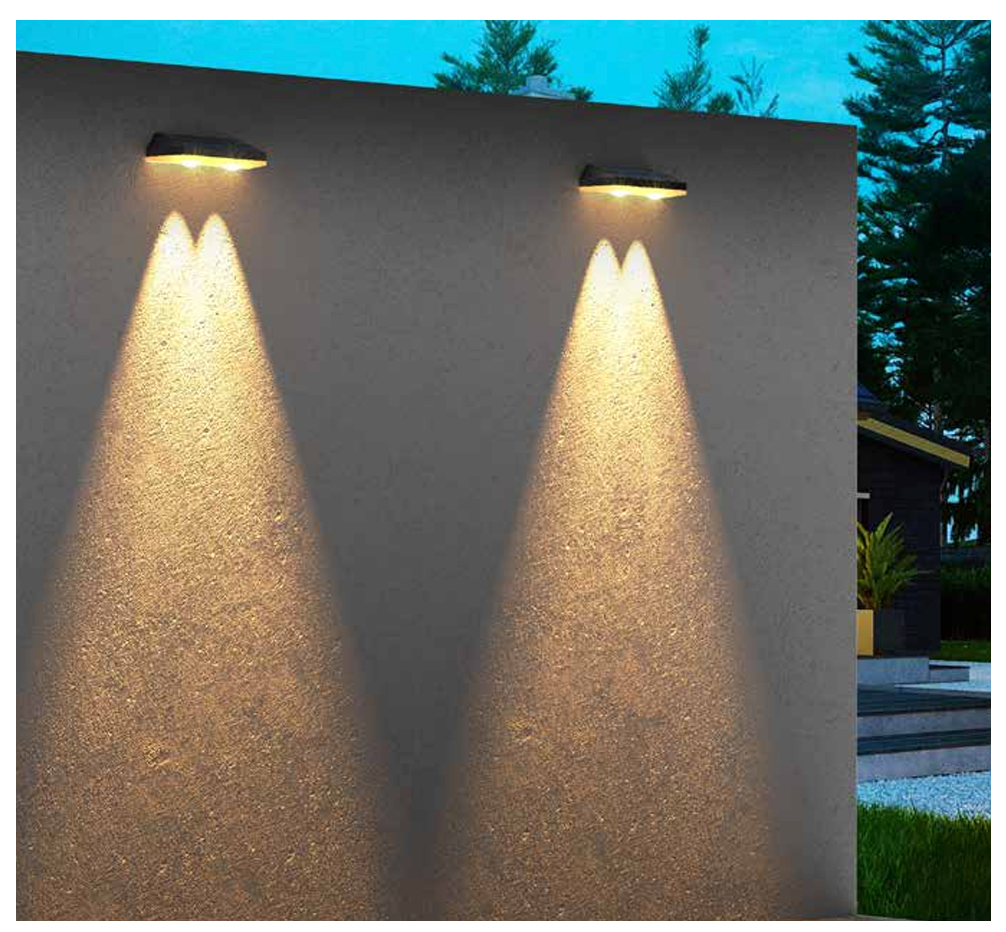
Wall-mounted fixtures provide illumination along building walls, entrances, and transition zones. Full-cutoff wall packs direct light downward and outward without upward waste or glare. They're essential for the critical transition points where pedestrians move between parking structures and adjacent buildings.
LED Flood Lights
Best For: Large surface lots requiring supplemental coverage, building-mounted lot lighting as an alternative to poles, signage illumination, perimeter security
High-output flood lights mounted on buildings, walls, or poles provide powerful, directed illumination across large areas. They're commonly used as supplements to pole-mounted area lights, as building-mounted alternatives where poles aren't practical, and for specific security zones requiring enhanced illumination.
LED Vapor Tight / Garage Strip Fixtures
Best For: Enclosed parking garages, underground structures, covered parking with low ceilings, car wash facilities
For parking structures with lower ceilings (8-12 feet) or specific layout requirements, vapor tight LED strip fixtures provide sealed, moisture-resistant illumination. Their linear format and sealed construction handle the exhaust, moisture, and temperature conditions of enclosed garages.
LED Bollard Lights
Best For: Pedestrian walkways, parking lot perimeters, landscaped islands, property entrances, wayfinding
Bollard lights provide low-level illumination along pedestrian pathways, property edges, and landscaped areas within or adjacent to parking facilities. They serve a dual role — functional illumination and aesthetic wayfinding that guides pedestrians safely through the environment.
LED Stairwell and Elevator Lobby Fixtures
Best For: Parking garage stairwells, elevator lobbies, enclosed access corridors — required by building code
Stairwells and elevator lobbies in parking structures are code-required to maintain specific illumination levels for safe egress. LED stairwell fixtures with integrated motion sensors save significant energy by maintaining low standby illumination when the stairwell is empty and boosting to full output when someone enters. Emergency battery backup ensures illumination during power failures.
LED Emergency and Exit Lighting
Best For: All parking structures — required by building code
Emergency egress lighting and illuminated exit signage are code-required in all commercial parking structures. LED emergency fixtures with battery backup provide automatic illumination during power failures, guiding pedestrians safely to exits and stairwells. In enclosed garages where disorientation in darkness is a serious hazard, emergency lighting is critical safety infrastructure.
LED Retrofit Kits for Existing Pole Fixtures
Best For: Surface lots where existing poles and fixture housings are in good condition
LED retrofit kits convert existing HPS and metal halide shoebox housings to LED technology by replacing the internal components — lamp, ballast, and reflector — with an LED module and driver. This preserves the existing housing, mounting, and wiring while delivering LED performance. Retrofit kits are the most economical upgrade path when existing housings are structurally sound and the pole infrastructure doesn't need replacement.
How to Choose the Right LED Fixture for Your Parking Facility
Understanding Illumination Standards: IES Recommendations
The Illuminating Engineering Society (IES) provides recommended illumination levels for parking facilities based on the type of lot, the level of activity, and the security needs. These standards form the basis for most municipal lighting ordinances and serve as the benchmark for adequate parking illumination.
Surface Parking Lots (IES RP-20)
Lot Activity LevelRecommended Minimum (fc)Recommended Uniformity Ratio (max:min)High activity (major retail, hospital, entertainment)3.6 fc minimum, 9.0 fc average4:1 or betterMedium activity (office, institutional, residential)1.8 fc minimum, 5.4 fc average4:1 or betterLow activity (overflow, employee, secondary)0.7 fc minimum, 2.2 fc average4:1 or better
Parking Garages (IES RP-20)
Garage AreaRecommended Average (fc)NotesGeneral parking — open deck5.0 fc averageHigher end for security-sensitive areasGeneral parking — enclosed5.0-10.0 fc averageHigher for poorly ventilated or high-crime areasDriving lanes5.0-10.0 fc averageHigher at curves, ramps, and intersectionsEntrance / exit transitions50 fc daytime, 5 fc nighttimeGradual transition reduces driver visual adaptation problemsStairwells5.0-10.0 fcMust meet building code minimumsRamps and turns10.0 fc minimumEnhanced visibility at points of vehicle conflictPedestrian crossings10.0 fc minimumCritical safety zone
Critical concept: Uniformity. Total light level is important, but uniformity — how evenly that light is distributed — is equally critical for safety. A parking lot with bright pools under each pole and dark valleys between them creates a visual adaptation problem: drivers' eyes constantly adjust between light and dark, reducing their ability to see obstacles, pedestrians, and vehicles in the dim zones. The IES-recommended maximum uniformity ratio of 4:1 (the brightest point is no more than 4x the dimmest point) ensures usable visibility across the entire surface.
Color Temperature (Kelvin): The Right Light for Parking
3000K (Warm White): Soft, warm appearance. Sometimes specified for upscale residential, hospitality, and mixed-use developments where visual warmth aligns with the property's aesthetic. Produces less glare discomfort than cooler temperatures. Growing in popularity for pedestrian-friendly, community-oriented developments.
4000K (Neutral White): The emerging standard for parking facilities. Balances good visibility with visual comfort and a modern appearance. Increasingly preferred by municipalities, architects, and property owners who want effective illumination without the clinical feel of 5000K. Meets dark sky compliance requirements in most jurisdictions.
5000K (Daylight): Maximum visibility and contrast. The traditional standard for parking lots and garages where security and safety are the primary concerns. Provides the crispest visibility for drivers and the best performance for security cameras. Can produce more glare discomfort than warmer alternatives.
Expert Recommendation: 4000K is the trend for new installations — it provides excellent visibility with a more comfortable appearance and better community acceptance than 5000K. For security-priority facilities (hospitals, transit, high-crime areas), 5000K maximizes visibility. PrimeLights fixtures with selectable CCT (3000K/4000K/5000K) let you choose after installation.
CRI: How Much Color Accuracy Does Parking Need?
Parking doesn't require the CRI 90+ of an auto body shop, but it does need enough color accuracy for safety and security:
CRI 70: The minimum standard for parking applications. Vehicle colors are reasonably distinguishable, and security camera footage is usable. Adequate for most surface lots and garages.
CRI 80+: Better color accuracy. Vehicle colors are clearly identifiable, facial features are more recognizable, and overall visual quality is noticeably improved. Recommended for facilities where security, customer experience, or property aesthetics are priorities.
Distribution Types: Directing Light Where It's Needed
LED area lights are available in multiple IES distribution types that control how light spreads from the fixture:
TypeDistribution PatternBest ForType IINarrow, elongated forward throwRoadways, narrow lots, perimeter rows along a property edgeType IIIMedium forward throw, moderate widthGeneral parking areas, wide driving lanesType IVMaximum forward throw, minimal backlightProperty perimeters, building-mounted fixtures where light behind the fixture is unwantedType VSymmetrical, square or circularCenter-of-lot poles, circular drives, intersectionsType VSSymmetrical squareRegular grid parking layouts
Selecting the right distribution type for each pole location ensures maximum coverage with minimum fixture count — and prevents light trespass onto adjacent properties.
Pole Height and Fixture Selection
Pole HeightTypical ApplicationRecommended Fixture Output12-15 ftPedestrian areas, small lots, residential5,000-15,000 lumens15-20 ftSmall-medium commercial lots15,000-25,000 lumens20-25 ftStandard commercial parking20,000-35,000 lumens25-30 ftLarge commercial, retail, hospital30,000-45,000 lumens30-40 ftLarge-scale lots, distribution centers, arenas40,000-60,000+ lumens
For parking garages (8-12 foot clear height): canopy fixtures at 3,000-8,000 lumens per fixture on spacing that achieves the required 5-10 foot-candle average.
Parking LED Lighting Applications: Facility-by-Facility Guide
Retail and Shopping Center Lots
Retail parking serves a dual purpose — safe customer access and first-impression aesthetics that influence shopping behavior. Customers who feel unsafe in a parking lot avoid the property, especially after dark. Well-lit lots extend effective retail hours and increase customer willingness to visit during evening periods.
Specify high-activity levels (3.6 fc minimum, 9.0 fc average) for primary customer parking closest to entrances. Cart corrals, pedestrian crossings, and handicap areas benefit from enhanced illumination. Consider 4000K for a modern, inviting appearance that complements the retail environment. LED's instant-on enables adaptive dimming during low-activity hours (late night) without warm-up concerns.
Office and Corporate Campus Parking
Office parking requires adequate illumination for employee safety during early morning and evening hours, particularly during winter months when most arrivals and departures occur in darkness. Medium-activity levels (1.8 fc minimum, 5.4 fc average) are standard for most office lots, with higher levels at building entrances, pedestrian paths, and security-camera zones.
Energy cost is a major driver for office parking LED upgrades — these lots run dusk-to-dawn year-round, and the per-fixture savings compound across hundreds of poles over decades of operation. Photocell-controlled operation and adaptive dimming during unoccupied hours provide additional savings.
Hospital and Healthcare Parking
Healthcare parking is high-activity with 24/7 operation, serving patients, visitors, and staff around the clock — including people who may be disoriented, physically impaired, or in emotional distress. Illumination levels should meet or exceed high-activity recommendations (3.6 fc minimum). Emergency department entrances, patient drop-off zones, and pedestrian crossings require enhanced illumination. CRI 80+ supports visual identification for security purposes.
Healthcare facilities also face heightened liability exposure for parking-related incidents. Superior lighting quality directly reduces this risk and supports the facility's duty of care to patients and visitors.
Multi-Level Parking Garages
Parking structures present the full range of lighting challenges in a single facility — enclosed decks, open decks, ramps, turns, stairwells, elevator lobbies, entrance/exit transition zones, and pedestrian pathways. Each zone has different illumination requirements, different environmental conditions, and different fixture needs.
General parking levels: Canopy-mounted LED fixtures at 5-10 fc average, spaced for uniform coverage across driving lanes and parking stalls. IP65 rated for the moisture, exhaust, and temperature conditions of enclosed structures.
Ramps and curves: Enhanced illumination (10+ fc) at points where vehicle paths conflict, grade changes reduce visibility, and driver attention is critical.
Entrance/exit transitions: The most challenging zone. Drivers entering a garage from bright daylight experience temporary visual adaptation — the inability to see in the relatively darker interior. Daytime entrance illumination of 50 fc helps bridge this adaptation gap. Nighttime levels can drop to 5 fc when the exterior-to-interior light differential is smaller. Adaptive controls that adjust entrance zone brightness based on time of day and ambient conditions are the ideal solution.
Stairwells and elevator lobbies: These are the most security-sensitive areas of any parking structure — enclosed, often isolated, and the transition points where pedestrians feel most vulnerable. Bright, high-CRI illumination (10+ fc) with motion sensors that bring fixtures to full output when occupied communicates safety and deters threats.
Underground and Enclosed Garages
Underground structures amplify every parking garage challenge — no natural light at any level, continuous artificial illumination required, higher moisture and condensation from temperature differentials, and a psychologically enclosed environment where lighting quality directly impacts the perceived safety and comfort of users.
Higher illumination levels (10+ fc average) and warmer color temperatures (3500K-4000K) can help mitigate the sense of confinement. Consistent, uniform illumination without dark pockets is especially important in underground structures where user perception of safety is already challenged.
Municipal and Public Lots
Municipal lots serve the general public and often lack the dedicated security staff of private facilities, making lighting the primary safety and security measure. These lots also face budget constraints that make energy efficiency a priority. LED conversion provides the dual benefit of improved safety (reducing the municipality's liability exposure) and reduced operating costs (freeing budget for other services).
Municipal lots are increasingly subject to outdoor lighting ordinances that restrict light trespass, upward light, and overall brightness — requirements that LED fixtures with precision optics are uniquely suited to meet.
EV Charging Stations
Electric vehicle charging stations within parking facilities require enhanced illumination around the charging equipment — for user safety while connecting and disconnecting vehicles, for security during the extended dwell time while vehicles charge, and for clear visibility of the charging equipment, payment interface, and surrounding area. Plan for 10+ fc at charging stations, with CRI 80+ for color-accurate visibility of the equipment and users.
Smart Parking Lighting: Controls and Energy Management
Photocell Controls (Dusk-to-Dawn)
The most basic and universal control for parking lot lighting. Photocells automatically activate fixtures at dusk and deactivate at dawn, eliminating the need for manual switching or timer adjustments as daylight hours change seasonally. Every surface lot should have photocell control as a minimum.
Motion and Occupancy Sensors
In parking garages, occupancy-based controls represent the largest energy-saving opportunity beyond the base LED conversion. Parking levels, zones, and stairwells that are unoccupied for significant periods can dim to reduced output (typically 10-30% of full) and ramp to full brightness when a vehicle or pedestrian is detected. Savings of 40-60% beyond base LED efficiency are typical for garages with variable occupancy.
Important: Parking lighting should never dim to complete darkness in any area where pedestrians could be present. Minimum standby levels must maintain safe egress illumination per building code.
Daylight Harvesting (Open Structures)
Parking garages with open sides or top decks exposed to daylight can use photosensors to automatically dim fixtures when natural light is sufficient. Upper levels of open-deck structures often need no artificial light during daylight hours — daylight harvesting controls handle this automatically.
Adaptive and Scheduled Controls
Facilities with predictable usage patterns can schedule lighting levels — full output during peak hours, reduced output during low-occupancy periods (late night, weekends, holidays). Adaptive systems combine time-based scheduling with real-time occupancy sensing for the most efficient operation.
Networked and Centralized Management
Large parking operations (multiple structures, campus-wide lots, municipal systems) benefit from networked lighting management that provides centralized monitoring, scheduling, and energy tracking across all facilities. Real-time fixture health monitoring enables predictive maintenance — identifying failing fixtures before they create dark spots and safety hazards.
Installation Planning for Parking LED Lighting
Surface Lot Layout and Photometric Design
Proper surface lot lighting begins with a photometric layout — a computer-modeled plan that calculates illumination levels at every point on the lot surface based on fixture output, distribution type, mounting height, pole spacing, and aiming angle. The photometric design verifies that the proposed layout meets IES recommended levels and uniformity ratios before a single fixture is installed.
Key layout principles:
Perimeter vs. interior poles: Poles along the lot perimeter use Type IV or forward-throw distributions to push light inward. Interior poles typically use Type III or Type V for broad, multi-directional coverage.
Pole spacing: Typical spacing for 25-30 foot poles with LED area lights is 80-120 feet between poles, depending on fixture output and required illumination levels. Tighter spacing produces better uniformity; wider spacing reduces infrastructure cost.
Avoid light trespass: Position perimeter poles and select distribution types to keep light within the property boundary. Full-cutoff fixtures with backlight shields prevent illumination from spilling onto neighboring properties and roadways.
Parking Garage Layout
Garage lighting layout follows the structural bay spacing of the building:
Fixture spacing aligns with structural columns and beam spacing for clean installation and uniform coverage. Typical spacing of 12-20 feet between canopy fixtures achieves 5-10 fc in standard garage applications.
Transition zones at entrances and exits require supplemental fixtures to achieve the higher illumination levels needed for visual adaptation.
Stairwells and lobbies are planned independently with fixtures selected for the specific space dimensions and code requirements.
Electrical Considerations
Surface lots: Each pole typically requires a homerun conduit back to the electrical panel or a loop circuit connecting multiple poles. LED's lower wattage means existing circuits can often support more fixtures — or the same number of fixtures at lower total load, reducing demand charges.
Parking garages: Fixtures connect to building electrical circuits, typically 277V for commercial installations. LED's lower wattage per fixture reduces circuit loading, potentially freeing capacity for other building loads.
Emergency circuits: Building codes require a portion of parking garage lighting to be on emergency power. Plan these connections during installation to avoid costly modifications later.
Controls wiring: Occupancy sensors, daylight harvesting, and networked controls require low-voltage or wireless infrastructure. For new construction, run control wiring during the electrical rough-in phase. For retrofits, wireless controls can add intelligence to existing fixtures without new wiring.
Pole Considerations for Surface Lots
Existing poles in good condition: LED shoebox fixtures mount directly to existing pole tenons, typically requiring no modification to the pole itself. Verify pole structural capacity — LED fixtures are generally lighter than the HID fixtures they replace, so existing poles are almost always adequate.
Existing poles in poor condition: If poles show corrosion, foundation damage, or structural deterioration, plan pole replacement as part of the LED upgrade. This is the most cost-effective time to replace aging infrastructure — the bucket truck is already on site.
New poles: For new lots or lot expansions, specify poles based on the photometric design — height, location, and foundation requirements. Standard direct-burial or anchor-base steel poles are the most common configurations.
The ROI of Parking LED Lighting
Direct Savings
Energy reduction: 60-80% lower electricity consumption. The long operating hours of parking lighting make these among the highest-savings LED projects in commercial real estate. A 100-pole surface lot saves $12,000-$15,000+ annually. A 500-fixture parking garage saves $43,000-$55,000+ annually.
Maintenance elimination: No bucket truck visits for surface lot poles ($150-$500+ per visit). No lift rentals and lane closures for garage fixtures. No lamp and ballast inventory. Over a 10-year fixture life, maintenance savings of $100-$300+ per fixture add substantially to the total return.
Demand charge reduction: LED's lower connected wattage reduces peak demand, lowering the demand charge component of commercial electricity bills — a savings that compounds beyond per-kWh reductions.
Indirect Benefits
Liability reduction: Improved parking illumination reduces slip-and-fall claims, vehicle accident claims, and crime-related claims. Insurance underwriters increasingly recognize LED-quality lighting as a risk reduction factor. Some property owners report reduced insurance premiums following parking lighting upgrades.
Tenant and customer retention: For commercial properties, well-lit parking directly influences tenant satisfaction and customer willingness to visit — particularly during evening hours and winter months when darkness comes early.
Property value: Parking lighting quality affects property appraisals, lease negotiations, and buyer perception. A modern LED parking system is a tangible asset that supports property value.
Code compliance: Many jurisdictions now require minimum parking illumination levels and energy efficiency standards. LED conversion ensures compliance with current and emerging requirements.
Typical Payback Period
Surface lot LED conversions (pole-mounted area lights) typically achieve payback in 2-3 years. Parking garage conversions with 24/7 operation achieve payback in 18-30 months. Projects that include utility rebates ($25-$150+ per fixture, widely available for parking conversions) often achieve payback under 2 years.
Frequently Asked Questions About Parking LED Lighting
What type of LED light is best for a parking lot?
LED shoebox-style area lights are the standard for surface parking lots. They mount on existing poles, use precision optics to control light distribution, and are available in outputs from 10,000 to 60,000+ lumens for mounting heights of 15-40 feet. Specify 4000K-5000K color temperature and CRI 70+ for the best balance of visibility and security camera performance.
How many foot-candles do I need for a parking lot?
IES RP-20 recommends 0.7-3.6 fc minimum and 2.2-9.0 fc average depending on the activity level of the lot. High-activity lots (retail, hospital, entertainment) need the highest levels. Low-activity lots (employee, overflow) can use lower levels. Uniformity — even distribution of light without dark spots — is equally important.
Can I replace HPS fixtures with LED on existing poles?
Yes. Most LED shoebox fixtures are designed as direct replacements for HPS and metal halide fixtures, mounting on the same pole tenon (typically 2-3/8" slipfitter). The LED fixture is generally lighter than the HID fixture it replaces, so existing poles are structurally adequate in nearly all cases.
How much can I save by converting my parking lot to LED?
A typical 100-pole lot replacing 400W HPS with 150W LED saves approximately $12,000-$15,000 per year in energy costs. Adding maintenance savings (eliminated bucket truck visits, lamps, and labor) brings total annual savings to $15,000-$20,000+. Payback is typically 2-3 years.
What about light pollution and dark sky compliance?
LED fixtures with full-cutoff optics, precision distribution types, and shielded designs produce minimal upward light and controllable distribution — key requirements for dark sky compliance. Specify full-cutoff or BUG-rated (Backlight-Uplight-Glare) fixtures and select distribution types that keep light within the property boundary. LED's directional nature makes it inherently better suited for dark sky compliance than omnidirectional HID fixtures.
Do parking garage lights need to be IP rated?
Yes. Parking structures expose fixtures to vehicle exhaust, moisture, condensation, temperature swings, and cleaning chemicals. Specify IP65 minimum for enclosed garages and IP66 for structures subject to direct rain exposure on open decks or heavy cleaning.
What is the best color temperature for parking lots?
4000K is the emerging standard — it provides excellent visibility with a more comfortable appearance and better community acceptance than 5000K. For high-security applications (hospitals, transit, high-crime areas), 5000K provides maximum contrast and visibility. The trend is clearly moving toward 4000K for new installations.
How do I light the entrance to a parking garage to prevent the "dark hole" effect?
The entrance transition zone is the most critical area to get right. Drivers entering from bright daylight can't see into a darker garage interior. Provide 50 fc of illumination at the entrance during daytime, tapering to the standard garage level (5-10 fc) over the first 50-100 feet of the interior. Adaptive controls that adjust entrance brightness based on time of day and ambient light conditions provide the ideal solution.
Are there rebates available for parking lot LED upgrades?
Yes. Parking lot lighting is one of the most commonly rebated LED applications because the per-fixture energy savings are so large. Utility rebates of $50-$150+ per fixture are common, and some programs offer enhanced rebates for fixtures with integrated controls. Your PrimeLights specialist can help identify available programs in your area.
How long do LED parking lot lights last?
Quality LED area lights and parking garage fixtures are rated for 50,000-100,000 hours. At dusk-to-dawn operation (~4,100 hours/year), a 50,000-hour fixture lasts over 12 years. At 24/7 garage operation, the same fixture lasts approximately 5.7 years. In either case, the fixture far outlasts the HPS and metal halide alternatives it replaces.
Why Choose PrimeLights for Your Parking LED Lighting
PrimeLights has been a trusted name in commercial and industrial LED lighting since 2010, with over 150,000 satisfied customers across every type of demanding environment — including parking facilities of every size, from single-lot commercial properties to multi-structure campus installations.
Purpose-Built for Parking Environments: Our parking fixtures are designed for the specific conditions of lots and garages — weather exposure, 24/7 operation, vehicle exhaust, moisture, and the demand for reliable, uniform illumination year after year.
Complete Parking Product Range: From high-output pole-mounted area lights to garage canopy fixtures, wall packs, stairwell lights, emergency fixtures, and retrofit kits — every fixture type a parking facility needs from a single trusted source.
Photometric Design Support: Our lighting specialists can provide photometric layouts verifying that your parking facility meets IES recommendations and local code requirements before installation — ensuring the right fixture count, spacing, and distribution for your specific facility.
Industry-Leading Warranties: We stand behind our products with comprehensive warranties that reflect our confidence in fixture quality and the demands of continuous parking operation.
Volume and Contractor Pricing: Parking projects typically involve significant fixture quantities. Our volume pricing and contractor programs make professional-grade LED lighting cost-effective for projects of any scale.
Get Started with PrimeLights Parking LED Lighting
Ready to upgrade your parking lot or garage with LED lighting that improves safety, reduces liability, and cuts energy costs? Contact the PrimeLights team today for personalized recommendations based on your facility's layout, operating hours, and performance requirements.
Our lighting experts can help you:
- Provide photometric designs verifying IES-compliant illumination levels and uniformity
- Select the right fixture type, output, distribution, and color temperature for each zone
- Specify controls for maximum energy savings — photocells, occupancy sensors, daylight harvesting, adaptive dimming
- Estimate energy and maintenance cost savings versus your current lighting
- Ensure compliance with local outdoor lighting ordinances and dark sky requirements
- Develop custom quotes for single-facility or multi-site projects
- Identify available utility rebates and energy incentive programs
Contact us today to get started.

Collection:
Parking Garage Lights & Parking Lot Lights
About PrimeLights' LED Parking Garage Lights
When it comes to parking garage lighting fixtures, LEDs are a great option. Not only do the consume 80-85% less energy (making them more cost-effective), but they also provide brighter (safer) lighting. This can ensure the safety of patrons going to and away from their vehicle, as well as avoid potential accidents in darker areas. They’ll even deter potential burglars from even thinking about attempting to steal or break into a car.
About PrimeLights LED Parking Lot Lights
A well lit parking lot can deliver a huge return on investment. Not only can it help make your facility easier to find at night—but safer too—both for motorists entering your lot, and for anyone leaving the premises. Our LED parking lot lights can do just that and more, as they provide top-notch illumination while consuming up to 85% less energy than traditional parking lot lighting fixtures. This means you’ll be able to keep them on all night, every night, and still save on your utility bills. What’s more, with many different types of parking lot lights available, each with their own distinct advantages, you’re bound to find a parking lot light that’s perfect for you.
Invest in your business by installing energy efficient LED parking lot lights in your lot!
Choose PrimeLights for All Your Parking Garage & Parking Lot Lights
If you’ve been looking for a lighting solution for your parking garage or lot, consider going with PrimeLights. We’re proud to be a trusted, nationwide supplier of LED lighting solutions for a variety of applications—including lights for parking lots and garages. Our team of lighting experts would be happy to provide you with product recommendations and based on your parking layout and other considerations.
Contact us today to speak to a PrimeLights staff member!